Derek Lowe had a nice piece yesterday looking back on the genomics bubble. I might quibble with his benchmarking of the end of the insanity -- the stock market bubble would not peak until just before the 2000 elections, but it's a fine piece & pretty accurate.
I should know -- I was there. I was more than just there, I was a significant part of it. No, I didn't think it up & I won't try to exaggerate my importance, but for what is perhaps the poster child of genomics excess (and if not that, certainly in the Pantheon of genomanic deities).
When I got to Millennium they were still largely focused on the positional cloning of disease genes. But, they had started throwing sequencing capacity at ESTs, small bits of genetic message which serve as toeholds to larger ones. The catch was that the sequencing analysis software had been designed for positional cloning work & not ESTs, and it's a very different ballgame. When sequencing genomic DNA seeing anything which looked like a gene was interesting. But when sequencing stuff that is almost nothing but genes, the challenge was to sort the wheat from the chaff. Lots of scientists spent mind-numbing hours scanning BLAST reports for things of interest, and often found things. But this is a lousy technique -- not only might eyes glaze over (or neurons croak) from monotony, but a really interesting match might not be obvious -- what if the top hit was "Uncharacterized protein X" but the 3rd match down was "TotalPharmaceuticalGold"? Or worse, that BLAST couldn't even find a useable match? Plus, was that a match or an identity -- did you find something new or just rediscover a lousy fragment of the old? More mind numbing staring.
Enter a cocky recent Ph.D. After building up some expertise and some more refined tools (which in their embryonic form nailed me the one gene patent of mine perhaps worth something), I had built a system which churned through all the ESTs and crudely organized them by what made things interesting (and tried to ignore all the boring stuff). Ion channels -- look on this web page. GPCRs -- that's over here. Possible secreted proteins, look at this analysis. Furthermore, it also attempted to amalgamate all the different ESTs into a view which was higher quality, longer and more compact -- and tell you which things were already described as proteins and which might be novel. Plus, more sensitive algorithms than BLAST were used to pull things into families.
Now in all honesty, it wasn't nearly perfect. Some of the mind-numbing review had shifted to me -- the early versions in particular had every homology approved (and named!) by me. The semi-automatically generated names were ugly. Various EST artifacts could join webs of unrelated genes into a horrible tangle. But, now there could be reviews of consolidated, pre-analyzed data (though also in fairness nobody ever totally trusted it, so the manual sequence-by-sequence reviews often continued).
Of course, if you have a mountain of loot you probably want to protect it. Enter the lawyers. Millennium had always filed on their discoveries; now they had lots of discoveries to protect. But protect from what? Well, the paranoia was a loss of "Freedom to Operate", usually known as FTO. Nobody knew what would stand up as a patent -- but there were instructive examples from the early biotech era of business plans sunk by a loss of FTO -- and expensive lawsuits that clearly marked that loss. So the patenting engine took off -- an expensive insurance policy against an unpredictable future.
Of course, what the lawyers wanted for the filing was as much info as possible -- and the automated analyses provided lots for them. But, they had been designed to be viewed in a web browser individually, not printed out en masse. Worse yet, by this time Informatics & Legal were in separate buildings -- one of my least pleasant Millennium memories was trying to script the printing a raft of analyses on a printer located in the other building. Plus, if there were inventions then somebody had to have invented them -- such as the person who wrote the code to find them & then reviewed the initial output. And so, I started having dates with the paralegals, an hour of hand-cramping signing of document after document. At one point, there were somewhere between 120-140 patent applications where I was sole or co-inventor.
This was the late 90's and the hype was getting thick -- we were guilty but so were others. Millennium wasn't a big pusher of high gene counts -- at least in the terms of the day (but that's another whole story), but certainly we started selling all those genes we had & the ones we extrapolated were still out there. A key part of the business model was to sell the genes many times -- if we could sell the same gene to Lilly for cardiovascular & Roche for metabolic and AstraZeneca for inflammation, all the better. Not that anything underhanded went on; we'd present the case to each company & most of the deals had exclusivity only within a therapeutic area.
How much did we believe our own Kool Aid? It varied. There was one day where I got in a blue mood because I convinced myself that once MLNM found all the genes we'd put ourselves out of work! But that was an extreme ( and what I hope is the height of my own personal stupidity); most of the time we thought we might be right or we might be overestimating a bunch -- but that our partners were intelligent adults who could make the same calculations. Never did I see an attitude that we were fleecing the suckers.
In particular, I remember one of my colleagues making a comment when the Bayer deal was about to be signed. A premise of that deal is that Millennium would identify proteins which could be easily screened, associate them by multiple means with a plausible role in disease, configure an HTS assay for them -- and then Bayer would quickly get hits from their libraries. Those hits in turn would be used to finish determining whether the protein of interest really played a role in disease. MLNM's (over)confidence in genomics matched by Bayer's (over)confidence in chemistry. My colleague said it was one thing to think up such an idea -- and another to 'go over the cliff' -- and he was nervously surprised that someone else was joining us. He was one of the most sober minded fellows around & wasn't making allusions to
Bayer being foolhardy -- just that we were both taking the leap together. Alas, I didn't think to laugh & reply "The fall will kill you".
The genomics rush, alas, did not end with a huge rush of new drug candidates. We thought we'd get a huge leap in biology -- and we did, but not as big as we thought. Traditional drug development & biology had cleaned out the easy stuff; there weren't tons of hidden gems. The chemical biology concept pretty much disappeared from the Bayer collaboration -- turned out it was long-and-painful to configure all those assays (though we did get them done).
BUT, I will admit to being only a partially reformed genomics fan. We got oversold, and it hurt. Much effort was wasted, and just think of the savings if the patent office had declared that you had to have actual causal function to patent a gene! But, much of what we proposed doing still is worth doing -- or has been done. In some sense the genomics companies were just too early for their own good (though the late entrants such as DeCode haven't fared much better). There are no genomics companies -- yet genomics is everywhere. Basic biology fueled by the genome or the technologies pushed by genomics permeate the drug industry (based on the 2 large pharmas I interviewed at in the year MLNM laid me off & what I can read; constructive dissent on this point is welcomed). Probably no novel small molecule drug development history will be directly pinned back to a 1990's genomics effort -- but also virtually no drugs going forward will have their development unaffected by the knowledge of the genome. Everything is tangled up & confused & merged.
The genomics gold rush was insane & wasteful -- but they were fun times!
Showing posts with label biotech history. Show all posts
Showing posts with label biotech history. Show all posts
Tuesday, January 20, 2009


Monday, August 06, 2007
Pre-WWW Hyperlinking
I recently attempted to rhapsodize on the wonders of restriction endonucleases. My exploration of this area has also reacquainted me with an amazing invention, what I might argue is the first artifact of what we now call synthetic biology.
An important early use, still going strong, for restriction enzymes is the cutting-and-pasting of DNA sequences. An early vector which was heavily used was pBR322, and it was also one of the first DNA molecules to have its entire sequence determined. pBR322 was particularly useful because for certain popular restriction enzymes it contained only a single site and that site was not in a critical region. This facilitated cloning into that site.
However, only a few restriction enzymes fit this description. In addition, a common problem with cloning into plasmids was that of empty vector, in which the plasmid reseals without capturing a DNA of interest. A clever scheme emerged somewhere of cloning into a portion (the alpha peptide) of E.coli beta-galactosidase; if the plasmid captured an insert then beta-Gal function would be disrupted. This loss-of-function would show up as white colonies when the E.coli were grown on media containing synthetic compounds that turn blue when cleaved by beta-Gal.
It turns out that this alpha peptide will accept a significant insertion of amino acids, and somewhere the germ of the idea of a polylinker emerged. The polylinker would contain many unique restriction sites and also enable blue-white cloning. For what I believe is the first time, a human sat down and designed a specific & novel DNA sequence for a specific & novel purpose and had it synthesized. Previous DNA synthesis efforts, such as the original effort by Har Gobind Khorana to make a tRNA or the synthesis of an artificial human hormone gene at UCSF, were intended to make something already extant in nature. The first polylinker was perhaps the first creative work of DNA!
That original polylinker had a mirror-symmetry and just 4 cloning sites, with the fold preventing using pairs of sites. Not long afterwards came the pUC polylinkers, which have each site represented only once and a very dense packing of sites. These have been propagated to many other vectors.
I've seen other polylinkers, but none seem to have the popularity of the pUC polylinkers. Shown is the pUC18 polylinker; one additional twist is that this sequence reads through (no stop codons) in either direction; pUC19 simply has the polylinker in the opposite orientation.
Two pedagogic angles occur to me. For any biology class, it would be fun to follow-up the session on restriction enzymes by handing each student the pUC polylinker sequence. The assignment is to find as many six or eight basepair palindromes as possible. The other interesting assignment would be for an advanced bioinformatics class: write a program to take a set of restriction enzymes and build a polylinker with them, with shorter outputs scoring higher and bidirectionality scoring higher. Such an exercise will really underline the achievement of the pUC design, which I believe was done with pencil-and-paper, not by computer program.
An important early use, still going strong, for restriction enzymes is the cutting-and-pasting of DNA sequences. An early vector which was heavily used was pBR322, and it was also one of the first DNA molecules to have its entire sequence determined. pBR322 was particularly useful because for certain popular restriction enzymes it contained only a single site and that site was not in a critical region. This facilitated cloning into that site.
However, only a few restriction enzymes fit this description. In addition, a common problem with cloning into plasmids was that of empty vector, in which the plasmid reseals without capturing a DNA of interest. A clever scheme emerged somewhere of cloning into a portion (the alpha peptide) of E.coli beta-galactosidase; if the plasmid captured an insert then beta-Gal function would be disrupted. This loss-of-function would show up as white colonies when the E.coli were grown on media containing synthetic compounds that turn blue when cleaved by beta-Gal.
It turns out that this alpha peptide will accept a significant insertion of amino acids, and somewhere the germ of the idea of a polylinker emerged. The polylinker would contain many unique restriction sites and also enable blue-white cloning. For what I believe is the first time, a human sat down and designed a specific & novel DNA sequence for a specific & novel purpose and had it synthesized. Previous DNA synthesis efforts, such as the original effort by Har Gobind Khorana to make a tRNA or the synthesis of an artificial human hormone gene at UCSF, were intended to make something already extant in nature. The first polylinker was perhaps the first creative work of DNA!
That original polylinker had a mirror-symmetry and just 4 cloning sites, with the fold preventing using pairs of sites. Not long afterwards came the pUC polylinkers, which have each site represented only once and a very dense packing of sites. These have been propagated to many other vectors.
I've seen other polylinkers, but none seem to have the popularity of the pUC polylinkers. Shown is the pUC18 polylinker; one additional twist is that this sequence reads through (no stop codons) in either direction; pUC19 simply has the polylinker in the opposite orientation.
CAAGCTTGCATGCCTGCAGGTCGACTCTAGAGGATCCCCGGGTACCGAGCTCGAATTCGT
Two pedagogic angles occur to me. For any biology class, it would be fun to follow-up the session on restriction enzymes by handing each student the pUC polylinker sequence. The assignment is to find as many six or eight basepair palindromes as possible. The other interesting assignment would be for an advanced bioinformatics class: write a program to take a set of restriction enzymes and build a polylinker with them, with shorter outputs scoring higher and bidirectionality scoring higher. Such an exercise will really underline the achievement of the pUC design, which I believe was done with pencil-and-paper, not by computer program.
Wednesday, June 06, 2007
Purple & White
When I was out in the garden yesterday a smile was brought to my face by some purple blossoms immediately adjacent to some white ones. Those blossoms have so many personal resonances: a bi-annual race, gustatory delight, visual fun & a bit of history. And this year, I am excessively pleased with myself because thinking about those plants led me to a successful guess as to the climate & weather of a distant city I have never had the pleasure of visiting.
Gardening in New England has some distinct challenges, and this year opened up with Mother Nature's nastiest tricks. I actually got some of the seeds for those plants in on time, as soon as the ground thawed, only to watch two successive late spring snowfalls. So my rare early jump was completely defeated.
The need for the jump is clear. Plants which can be seeded early are cool weather crops, and most do very poorly in warm weather. Before you know it, the heat of summer is upon us and those cool weather crops fade in one way or another. Some truly die, but others 'bolt' by launching flower stalks that simultaneously degrade the flavor of the vegetable. We are already experiencing 90 degree (F) days, so the race is on.
The plant in question is visually fun because it sends thin curling tendrils to wrap around anything it encounters. As a kid I loved uncurling them gently and wrapping them around a support.
If you hadn't guessed the plant already, the history & weather bits are a giveaway, as the city I guessed has much cooler summers than Boston is Brno, or Breunn as Brother Gregor would have known it. Those beautiful flowers are on my pea plants, and it occurred to me that while there were probably many considerations in their choice as a model, being able to grow them frequently would be a plus -- and in Boston you can't do much with peas for most of the summer. The second race does begin in mid-to-late summer, if you try to seed a second crop. The other New England weather treachery is the early late frost, usually followed by a long burst of warm autumn to truly twist the pruning knife in your side -- if that killer frost hadn't arrived, another 5-6 weeks of fresh produce would have come in.
Which, of course, is the main reason I do it. I don't grow large quantities of vegetables, but it really is a magic moment when you nearly instantly transfer something you grew from the plant to your mouth and then savor all its sensuous delights. For peas it is sweetness & crunch.
That choice of peas was quite lucky, as pea genetics are relatively straightforward. Many plants have horribly complicated genetics, and indeed one of the then luminaries whom Mendel corresponded with suggested he repeat his experiments in hawkweek, which is one of those many genetic messes.
Of course, later workers would tease apart some of those messes to lead to interesting discoveries, and more are sure to come. But right now, I just want to discover some pods before my peas wilt in the summer heat.
Gardening in New England has some distinct challenges, and this year opened up with Mother Nature's nastiest tricks. I actually got some of the seeds for those plants in on time, as soon as the ground thawed, only to watch two successive late spring snowfalls. So my rare early jump was completely defeated.
The need for the jump is clear. Plants which can be seeded early are cool weather crops, and most do very poorly in warm weather. Before you know it, the heat of summer is upon us and those cool weather crops fade in one way or another. Some truly die, but others 'bolt' by launching flower stalks that simultaneously degrade the flavor of the vegetable. We are already experiencing 90 degree (F) days, so the race is on.
The plant in question is visually fun because it sends thin curling tendrils to wrap around anything it encounters. As a kid I loved uncurling them gently and wrapping them around a support.
If you hadn't guessed the plant already, the history & weather bits are a giveaway, as the city I guessed has much cooler summers than Boston is Brno, or Breunn as Brother Gregor would have known it. Those beautiful flowers are on my pea plants, and it occurred to me that while there were probably many considerations in their choice as a model, being able to grow them frequently would be a plus -- and in Boston you can't do much with peas for most of the summer. The second race does begin in mid-to-late summer, if you try to seed a second crop. The other New England weather treachery is the early late frost, usually followed by a long burst of warm autumn to truly twist the pruning knife in your side -- if that killer frost hadn't arrived, another 5-6 weeks of fresh produce would have come in.
Which, of course, is the main reason I do it. I don't grow large quantities of vegetables, but it really is a magic moment when you nearly instantly transfer something you grew from the plant to your mouth and then savor all its sensuous delights. For peas it is sweetness & crunch.
That choice of peas was quite lucky, as pea genetics are relatively straightforward. Many plants have horribly complicated genetics, and indeed one of the then luminaries whom Mendel corresponded with suggested he repeat his experiments in hawkweek, which is one of those many genetic messes.
Of course, later workers would tease apart some of those messes to lead to interesting discoveries, and more are sure to come. But right now, I just want to discover some pods before my peas wilt in the summer heat.
Monday, March 19, 2007
Personalized Medicine: The long slog
Personalized medicine is a wonderful concept: instead of lumping huge groups of patients with similar symptoms together to be treated with a standard regimen, therapy would be tailored to each patient based on the specifics of their disease. This fine-grained diagnosis would be dtermined using the fruits of the human genome project.
In some sense this is simply an attempt to accerate the long-term trend in medicine of subdividing diseases. From four humors we have moved to a myriad of diseases. In a more specific sense, consider leukemia. In the 1940's, when my paternal grandmother succumbed to this disease, there were (as far as I can tell) less than a half dozen recognized leukemia subtypes; these days there are certainly over one hundred. This is not idle splitting; each disease has its own diagnostic hallmarks, treatment strategies, and outcome expectations. Great (but not universal) success has been achieved with childhood leukemias, whereas some other leukemias are still very grim sentences.
To realize the dream of personalized medicine is going to require a lot of hard work, both in the lab and in the clinic. I'm going to go into some detail on one such endeavor, one which I am very familiar with because I was peripherally involved with it. Now, in the interest of full disclosure, it must be stated that I still retain a small financial interest in my former employer, Millennium Pharmaceuticals, and that several of the authors are good friends. However, it should also be pointed out that while Millennium once trumpeted every baby step towards personalized medicine, the electronic publication of this story engendered no press release. If the company thinks it can't perk up its share price with the story, there is faint reason to think I can.
Multiple myeloma is a malignancy of the antibody secreting cells, the plasma B cells. Two famous victims are the columnist Ann Landers and actor Peter Boyle; a well-known long-term survivor is former vice presidential candidate Geraldine Ferraro. Cancers are often loosely broken into two categories: "liquid" tumors such as leukemias and solid tumors. Myelomas occupy the mushy middle: while they are derangements of the immune system like leukemias, myelomas can form distinct tumors (plasmacytomas) in the body. A hallmark of the disease is bone destruction around the tumors; patients' X-rays can have a 'swiss-cheese' appearance.
Myelomas are a devastating disease, but also occupy an important place in biotech history. Because myelomas sprout from a single deranged antibody-secreting cell, the blood (and ultimately urine) of patients becomes full of a single antibody, the M-protein (also known historically as a Bence-Jones protein). A flash of inspiration led Koehler & Milstein to realize that if they could have that antibody be one of their choosing, then a limitless source of a specific antibody could be at hand. The monoclonal antibody technology which they invented led to a host of useful reagents and tools, including home pregnancy kits. The last decade has finally seen monoclonal antibodies become important therapeutic options, particularly in cancer, and a number are being tried on myeloma: a complete circle.
The drug of interest here is not an antibody but rather a small molecule: bortezomib, tradename Velcade and known in the older literature as MLN341, LDP341 or PS341. Bortezomib works like no other drug on the market: it blocks the action of a large complex called the proteasome. A key normal function of the proteasome is to serve as the cells main protein disposal system, chewing old or broken proteins back into amino acids. Destruction of proteins by the proteasome can also be a regulated process and appears to be a component of many genetic processes.
Bortezomib has been tried as a therapeutic agent, either alone or in concert with other drugs, against a wide array of tumors. It has disappointed often, still tantalizes in some areas, and has received FDA approval for two malignancies: multiple myeloma and another B-cell malignancy called mantle cell lymphoma.
Early in the clinical trial process Millennium decided to build a personalized medicine component into the main Velcade trials in multiple myleoma. The justification for this was a mix of different ideas: including a desire to show results in personalized medicine, a potential to use the personalized medicine element to support FDA approval should trial results be equivocal, an opportunity to understand why myelomas are sensitive to proteasome inhibition.
The design was both simple and audacious: in each trial patients would be asked to supply a bone marrow biopsy for analysis by RNA profiling, which can examine the levels of each gene's mRNA. It sounds simple; in practice this would use a cutting edge technology (RNA profiling) notorious for sensitivity to sample processing. It would also be the first use of such technology in a prospective clinical trial; prior publications had either used archived samples or new samples from available patient populations. Protocols would have to be devised, staff trained at each clinical center in a multi-center trial.
The results can now be seen in Blood as Mulligan et al. You will need paid access to the journal to read the details, which most large academic libraries should have. Also, the sponsors of Blood (American Society of Hematologists) have some mechanism for patient access -- and eventually (I think it is 6 months) they make everything free. The data supplement and methods supplement are free.
Table 1 gives you some hint why few companies will be eager to invest in this kind of study again, as it details how many samples actually made it to the analysis. One can envision the path from trial to data ready to analyze as a pipeline of many steps, each of which is leaky. Patients must consent, the myleoma fraction purified, RNA captured, arrays analyzed and finally useful survival data obtained. Patient consent refusals (or later paperwork deficiencies), poor samples, patients lost to follow-up, etc. eat into the starting material. Even good clinical luck can be problematic: one of the key bortezomib trials was halted early because the drug was clearly working better than the control drug. This was great news for patients, who needed (and still need) more treatment options, and great news for the company, which could more quickly obtain approval to sell the drug. But it both deprived the personalized medicine study of anticipated patients and muddied the waters on many others. For example, samples had been obtained from control arm patients, but now many of these patients were crossing over to bortezomib and were no longer useful controls.
How leaky was the pipeline? Four clinical studies had RNA profiling components (another complication; each study was on a different trial population, with different disease characteristics). Looking at evaluable survival (meaning the patient stayed in the study long enough to figure out if the drug helped them live longer or not): 13%, 22%, 23% and 22% of patients from the 4 trials (024, 025, 039 & 040 respectively) had data for evaluation.
On the other end, many studies were accumulating information that myleoma has many genetic subtypes: perhaps at least seven or so major ones, and many of these can be further subdivided. For example, one major translocation driving myleoma involves a gene called MMSET. In a subset of these patients, a second gene (FGFR3) is also activated by the translocation. Many other classical clinical measures are used by clinicians, such as albumin and CRP levels. A very interesting question would be whether bortezomib had greater or lesser activity in any of the subtypes (or sub-subtypes); but with the ferocious sample attrition, the sample numbers just aren't great enough to be able to draw conclusions. This also illustrates the power & problem of RNA microarrays: you can look at tens of thousands of genes, allowing you to find patterns with few preconceived biases. But, you are looking at tens of thousands of genes, so the multiple testing problem is very acute.
The other thing most frustrating about this study, as in a large number of RNA profiling studies, is that there is no Eureka! moment coming from the data. Gene sets were successfully identified which can predict response or survival, but what do they mean? The hope that RNA profiling would provide the Cliff's Notes to a tumor is a hope rarely realized; instead the tumor reveals a nearly inscrutable scrawl. The study succeeded scientifically, but commercially it was not a contributor.
This will probably be more the norm than the exception in the quest for personalized medicine. Huge investments will need to be made in large clinical studies, many of which won't bear fruit, at least immediately. Combined with other myleoma studies, the Mulligan et al study will enhance our knowledge of myleoma. The execution of the study provides a roadmap for other such studies. New technologies are available which weren't when these studies began. In particular, for cancer one might opt for DNA profiling to map the underlying genetic makeup of the tumor (greatly hashed), rather than RNA. While RNA is where the action really is, DNA is much more stable and therefore may lead to results more consistent between clinical sites. And once in a while, a study might just have results that have oncologists running through the streets, making the whole exercise worthwhile.
In some sense this is simply an attempt to accerate the long-term trend in medicine of subdividing diseases. From four humors we have moved to a myriad of diseases. In a more specific sense, consider leukemia. In the 1940's, when my paternal grandmother succumbed to this disease, there were (as far as I can tell) less than a half dozen recognized leukemia subtypes; these days there are certainly over one hundred. This is not idle splitting; each disease has its own diagnostic hallmarks, treatment strategies, and outcome expectations. Great (but not universal) success has been achieved with childhood leukemias, whereas some other leukemias are still very grim sentences.
To realize the dream of personalized medicine is going to require a lot of hard work, both in the lab and in the clinic. I'm going to go into some detail on one such endeavor, one which I am very familiar with because I was peripherally involved with it. Now, in the interest of full disclosure, it must be stated that I still retain a small financial interest in my former employer, Millennium Pharmaceuticals, and that several of the authors are good friends. However, it should also be pointed out that while Millennium once trumpeted every baby step towards personalized medicine, the electronic publication of this story engendered no press release. If the company thinks it can't perk up its share price with the story, there is faint reason to think I can.
Multiple myeloma is a malignancy of the antibody secreting cells, the plasma B cells. Two famous victims are the columnist Ann Landers and actor Peter Boyle; a well-known long-term survivor is former vice presidential candidate Geraldine Ferraro. Cancers are often loosely broken into two categories: "liquid" tumors such as leukemias and solid tumors. Myelomas occupy the mushy middle: while they are derangements of the immune system like leukemias, myelomas can form distinct tumors (plasmacytomas) in the body. A hallmark of the disease is bone destruction around the tumors; patients' X-rays can have a 'swiss-cheese' appearance.
Myelomas are a devastating disease, but also occupy an important place in biotech history. Because myelomas sprout from a single deranged antibody-secreting cell, the blood (and ultimately urine) of patients becomes full of a single antibody, the M-protein (also known historically as a Bence-Jones protein). A flash of inspiration led Koehler & Milstein to realize that if they could have that antibody be one of their choosing, then a limitless source of a specific antibody could be at hand. The monoclonal antibody technology which they invented led to a host of useful reagents and tools, including home pregnancy kits. The last decade has finally seen monoclonal antibodies become important therapeutic options, particularly in cancer, and a number are being tried on myeloma: a complete circle.
The drug of interest here is not an antibody but rather a small molecule: bortezomib, tradename Velcade and known in the older literature as MLN341, LDP341 or PS341. Bortezomib works like no other drug on the market: it blocks the action of a large complex called the proteasome. A key normal function of the proteasome is to serve as the cells main protein disposal system, chewing old or broken proteins back into amino acids. Destruction of proteins by the proteasome can also be a regulated process and appears to be a component of many genetic processes.
Bortezomib has been tried as a therapeutic agent, either alone or in concert with other drugs, against a wide array of tumors. It has disappointed often, still tantalizes in some areas, and has received FDA approval for two malignancies: multiple myeloma and another B-cell malignancy called mantle cell lymphoma.
Early in the clinical trial process Millennium decided to build a personalized medicine component into the main Velcade trials in multiple myleoma. The justification for this was a mix of different ideas: including a desire to show results in personalized medicine, a potential to use the personalized medicine element to support FDA approval should trial results be equivocal, an opportunity to understand why myelomas are sensitive to proteasome inhibition.
The design was both simple and audacious: in each trial patients would be asked to supply a bone marrow biopsy for analysis by RNA profiling, which can examine the levels of each gene's mRNA. It sounds simple; in practice this would use a cutting edge technology (RNA profiling) notorious for sensitivity to sample processing. It would also be the first use of such technology in a prospective clinical trial; prior publications had either used archived samples or new samples from available patient populations. Protocols would have to be devised, staff trained at each clinical center in a multi-center trial.
The results can now be seen in Blood as Mulligan et al. You will need paid access to the journal to read the details, which most large academic libraries should have. Also, the sponsors of Blood (American Society of Hematologists) have some mechanism for patient access -- and eventually (I think it is 6 months) they make everything free. The data supplement and methods supplement are free.
Table 1 gives you some hint why few companies will be eager to invest in this kind of study again, as it details how many samples actually made it to the analysis. One can envision the path from trial to data ready to analyze as a pipeline of many steps, each of which is leaky. Patients must consent, the myleoma fraction purified, RNA captured, arrays analyzed and finally useful survival data obtained. Patient consent refusals (or later paperwork deficiencies), poor samples, patients lost to follow-up, etc. eat into the starting material. Even good clinical luck can be problematic: one of the key bortezomib trials was halted early because the drug was clearly working better than the control drug. This was great news for patients, who needed (and still need) more treatment options, and great news for the company, which could more quickly obtain approval to sell the drug. But it both deprived the personalized medicine study of anticipated patients and muddied the waters on many others. For example, samples had been obtained from control arm patients, but now many of these patients were crossing over to bortezomib and were no longer useful controls.
How leaky was the pipeline? Four clinical studies had RNA profiling components (another complication; each study was on a different trial population, with different disease characteristics). Looking at evaluable survival (meaning the patient stayed in the study long enough to figure out if the drug helped them live longer or not): 13%, 22%, 23% and 22% of patients from the 4 trials (024, 025, 039 & 040 respectively) had data for evaluation.
On the other end, many studies were accumulating information that myleoma has many genetic subtypes: perhaps at least seven or so major ones, and many of these can be further subdivided. For example, one major translocation driving myleoma involves a gene called MMSET. In a subset of these patients, a second gene (FGFR3) is also activated by the translocation. Many other classical clinical measures are used by clinicians, such as albumin and CRP levels. A very interesting question would be whether bortezomib had greater or lesser activity in any of the subtypes (or sub-subtypes); but with the ferocious sample attrition, the sample numbers just aren't great enough to be able to draw conclusions. This also illustrates the power & problem of RNA microarrays: you can look at tens of thousands of genes, allowing you to find patterns with few preconceived biases. But, you are looking at tens of thousands of genes, so the multiple testing problem is very acute.
The other thing most frustrating about this study, as in a large number of RNA profiling studies, is that there is no Eureka! moment coming from the data. Gene sets were successfully identified which can predict response or survival, but what do they mean? The hope that RNA profiling would provide the Cliff's Notes to a tumor is a hope rarely realized; instead the tumor reveals a nearly inscrutable scrawl. The study succeeded scientifically, but commercially it was not a contributor.
This will probably be more the norm than the exception in the quest for personalized medicine. Huge investments will need to be made in large clinical studies, many of which won't bear fruit, at least immediately. Combined with other myleoma studies, the Mulligan et al study will enhance our knowledge of myleoma. The execution of the study provides a roadmap for other such studies. New technologies are available which weren't when these studies began. In particular, for cancer one might opt for DNA profiling to map the underlying genetic makeup of the tumor (greatly hashed), rather than RNA. While RNA is where the action really is, DNA is much more stable and therefore may lead to results more consistent between clinical sites. And once in a while, a study might just have results that have oncologists running through the streets, making the whole exercise worthwhile.
Monday, February 26, 2007
The Bio Economy
Derek Lowe has another post about the Biotech industry's glorious pool of red ink. A number of the comments are useful to think about -- perhaps most industries go through such a long boot phase, but we forget because we watch them when they are established (and often in decline).
Thinking about biotech losses reminded me of the parallels that are often drawn between the human world and the cellular world. The molecule adenosine triphosphate, or ATP, is often described as the currency of the cellular world. This is because it is the most common driver of reactions in the cell. There are other such molecules, such as ion gradients & ATP's cousin GTP, but ATP is far-and-away the most common currency -- the dollar of the molecular economy.
There is a key difference between human currency and molecular currency, one that I confess I never can quite convince myself I understand on the human side. While there are occasional money changing operations in the cell, such as using ATP to regenerate the other nucleotide triphosphates, when ATP is used to drive a reaction the energy the currency is consumed. While sometimes that energy sets up another process, many times the chain of payment ends there. When a kinase phosphorylates a protein, there is no regain of that ATP when the phosphate is kicked off by a phosphatase. When nucleotide triphosphates are used to build DNA or RNA, that energy is used forever.
But in the human world, our dollar bills don't crumble each time we use them. I bought a pizza tonight, the pizza shop will in turn pay its suppliers and employees, who will spend the money again and again and again. Nowadays the bulk of my transactions are purely electronic (such as the pizza purchase), so there is no money to crumble. It's never been obvious to me the economic equivalents of entropy; the economy seems too close to a perpetual motion machine to be believed.
There are a few other parallels though. For example, glycolysis initially requires an investment of ATP to yield far more ATP; you need money to make money! Some molecules use clever barter strategies to avoid needing to deal with currency -- for example, DNA topoisomerases perform bond swapping maneuvers so that they can rejoin the DNA they have broken without requiring any further ATP. Money makes the world go 'round; ATP makes bacterial flagella go 'round.
Gotta go -- as they say, time is ATP!
Thinking about biotech losses reminded me of the parallels that are often drawn between the human world and the cellular world. The molecule adenosine triphosphate, or ATP, is often described as the currency of the cellular world. This is because it is the most common driver of reactions in the cell. There are other such molecules, such as ion gradients & ATP's cousin GTP, but ATP is far-and-away the most common currency -- the dollar of the molecular economy.
There is a key difference between human currency and molecular currency, one that I confess I never can quite convince myself I understand on the human side. While there are occasional money changing operations in the cell, such as using ATP to regenerate the other nucleotide triphosphates, when ATP is used to drive a reaction the energy the currency is consumed. While sometimes that energy sets up another process, many times the chain of payment ends there. When a kinase phosphorylates a protein, there is no regain of that ATP when the phosphate is kicked off by a phosphatase. When nucleotide triphosphates are used to build DNA or RNA, that energy is used forever.
But in the human world, our dollar bills don't crumble each time we use them. I bought a pizza tonight, the pizza shop will in turn pay its suppliers and employees, who will spend the money again and again and again. Nowadays the bulk of my transactions are purely electronic (such as the pizza purchase), so there is no money to crumble. It's never been obvious to me the economic equivalents of entropy; the economy seems too close to a perpetual motion machine to be believed.
There are a few other parallels though. For example, glycolysis initially requires an investment of ATP to yield far more ATP; you need money to make money! Some molecules use clever barter strategies to avoid needing to deal with currency -- for example, DNA topoisomerases perform bond swapping maneuvers so that they can rejoin the DNA they have broken without requiring any further ATP. Money makes the world go 'round; ATP makes bacterial flagella go 'round.
Gotta go -- as they say, time is ATP!
Friday, February 23, 2007
The First Tree
I had the opportunity yesterday to visit Boston's Museum of Science & there were two special treats in store for me. First, a magnificent display of the late Bradford Washburn's mountain photography. Right next door was an exhibit on the life and impact of Charles Darwin.
The Darwin exhibit focuses on his life but also touches on why his theory is so central to modern biology. There are some of his actual notebooks (of facsimiles). On one of these, I believe an original, is the first evolutionary tree -- a sketch by Darwin early in his contemplations. At the top, in jubilant exclamation, is "I think!". What an understatement!
The Darwin exhibit focuses on his life but also touches on why his theory is so central to modern biology. There are some of his actual notebooks (of facsimiles). On one of these, I believe an original, is the first evolutionary tree -- a sketch by Darwin early in his contemplations. At the top, in jubilant exclamation, is "I think!". What an understatement!
Tuesday, February 13, 2007
Valentine's Reading
Since tomorrow is Valentine's Day, I was going to suggest a good book appropriate to the date. As is often the case, that book suggests some others in a chain until we finally get back to another book appropriate for the day, though unfortunately for that very reason it is not a good book.
The first book presents a small challenge. While I would never consider myself a prude, its title could potentially cause filters everywhere to flag this site as unsuitable for the younger set (I'm sure a lot of elementary school kids read the site fanatically). But, I hate to be one to change content, especially in a book's title. There's nothing actually pornographic about the book, except the cover -- but only if you have six legs & antennae. So, I will write out the title, but you will need to translate one word.
The book is Olivia Judson's Dr.Tatiana's TCTGAANNN Advice to All Creation. The book is structured as a series of letters to an advice column, letters from various creatures perplexed by misadventures in their love life. Fish who wake up a different gender, mice who are sure their mates are cheating on them, etc. While the schtick could have worn thin, I enjoyed it throughout. She uses a lot of humor, but also details the myriad of reproductive strategies found across the animal world (if I remember correctly, some bacteria slip in near the end). Since reading the book, I can't help but read a story on a novel strategy and think: That would make a great Dr. Tatiana letter. I also get warm inside thinking pondering the notion that Dr. Tatiana should be required high school biology class reading. On the one hand, the students might actually want to read the book! Even better would be the reaction of certain folk, who would be having a hard time deciding whether to be more upset about the S word or about the E word sprinkled throughout (Evolution).
Judson turns out to be the daughter of Horace Judson, whose The Eighth Day of Creation is another must read. Eighth Day describes three of the major early thrusts of molecular biology: the assault on the nature of DNA and the genetic code, the quest to understand gene regulation and the first solving of protein structures. I won't claim it is a small book (686 pages -- and not a large typeface!) or light reading, but in many places you can begin to feel the excitement those pioneers felt as they pushed forward and some of the outsized personalities of the scientists. Some biotech books capture this: Invisible Frontiers (about the early days of recombinant DNA work & the race to clone insulin) and The Billion Dollar Molecule (about the founding of Vertex Pharmaceuticals) would fall into that category; two books I read more recently (and have forgotten the titles) failed miserably -- just the facts ma'am (which has something to do with my forgetting the titles).
Eighth Day is the work of a professional author and will weigh down your backpack. For a lighter touch, both physically & intellectually, try James Watson's The Double Helix. It is, of course, a memoir and Watson was willing to say outlandish things. The opening line is a classic: "I have never seen Francis Crick in a modest mood". I got to meet Watson two summers ago at a scientific meeting (it is a great sadness I never got to meet Crick) and he is just as verbally audacious in person. But again, it does give some feel for the excitement of the time and how high feelings ran.
But finally, please DON'T read Watson's sequel, Genes, Girls, and Gamow: After the Double Helix. Perhaps with a good editor it could have been boiled down into something enjoyable to read, but I'm not sure there would be enough left. Watson spends far too much time on his social life -- and particularly his love life (egad! it's in the title!). Valentine's Day or not, the last thing I want to read is an expanded version of anyone's, even one of the towering figures of 20th century science, little black book.
The first book presents a small challenge. While I would never consider myself a prude, its title could potentially cause filters everywhere to flag this site as unsuitable for the younger set (I'm sure a lot of elementary school kids read the site fanatically). But, I hate to be one to change content, especially in a book's title. There's nothing actually pornographic about the book, except the cover -- but only if you have six legs & antennae. So, I will write out the title, but you will need to translate one word.
The book is Olivia Judson's Dr.Tatiana's TCTGAANNN Advice to All Creation. The book is structured as a series of letters to an advice column, letters from various creatures perplexed by misadventures in their love life. Fish who wake up a different gender, mice who are sure their mates are cheating on them, etc. While the schtick could have worn thin, I enjoyed it throughout. She uses a lot of humor, but also details the myriad of reproductive strategies found across the animal world (if I remember correctly, some bacteria slip in near the end). Since reading the book, I can't help but read a story on a novel strategy and think: That would make a great Dr. Tatiana letter. I also get warm inside thinking pondering the notion that Dr. Tatiana should be required high school biology class reading. On the one hand, the students might actually want to read the book! Even better would be the reaction of certain folk, who would be having a hard time deciding whether to be more upset about the S word or about the E word sprinkled throughout (Evolution).
Judson turns out to be the daughter of Horace Judson, whose The Eighth Day of Creation is another must read. Eighth Day describes three of the major early thrusts of molecular biology: the assault on the nature of DNA and the genetic code, the quest to understand gene regulation and the first solving of protein structures. I won't claim it is a small book (686 pages -- and not a large typeface!) or light reading, but in many places you can begin to feel the excitement those pioneers felt as they pushed forward and some of the outsized personalities of the scientists. Some biotech books capture this: Invisible Frontiers (about the early days of recombinant DNA work & the race to clone insulin) and The Billion Dollar Molecule (about the founding of Vertex Pharmaceuticals) would fall into that category; two books I read more recently (and have forgotten the titles) failed miserably -- just the facts ma'am (which has something to do with my forgetting the titles).
Eighth Day is the work of a professional author and will weigh down your backpack. For a lighter touch, both physically & intellectually, try James Watson's The Double Helix. It is, of course, a memoir and Watson was willing to say outlandish things. The opening line is a classic: "I have never seen Francis Crick in a modest mood". I got to meet Watson two summers ago at a scientific meeting (it is a great sadness I never got to meet Crick) and he is just as verbally audacious in person. But again, it does give some feel for the excitement of the time and how high feelings ran.
But finally, please DON'T read Watson's sequel, Genes, Girls, and Gamow: After the Double Helix. Perhaps with a good editor it could have been boiled down into something enjoyable to read, but I'm not sure there would be enough left. Watson spends far too much time on his social life -- and particularly his love life (egad! it's in the title!). Valentine's Day or not, the last thing I want to read is an expanded version of anyone's, even one of the towering figures of 20th century science, little black book.
Wednesday, January 17, 2007
Smell-o-phone
One of the classic Bugs Bunny cartoons puts an elderly Bugs and Elmer far into the future. In the background, one hears the news bulletin that 'Smell-o-vision replaces television" -- this was one of my childhood friends' favorite gags.
One of my favorite bits of irrational exuberance during the Internet bubble was a company (whose name escaped me -- but not Google -- see this article) called Digiscents which was promising to build a box which would attach to your computer and generate smells. The pitch was that perfume websites could give samples, restaurant sites would tempt you with their aromas, etc. No mention of what would happen if you went to a site focused on skunks or house training your dog -- though the article Google dug up did mention that game designers were inquiring about rotting flesh smells.
What I relished about this company was that they were simultaneously dipping into two pools of irrational exuberance -- not only was it a crazy dotcom, but it was a crazy biotech as well! They were hiring basic biologists & bioinformaticists to try and do basic research on human olfaction! I suppose the pitch was that by understanding the sense of smell they could build a box which could use a small number of odorants to generate a large number of aromatic sensations, but to me this underlined how far ahead they were of the science.
Further Googling picked up all sorts of stories. It would seem that the choice of product names was about as clearly thought out as the business plan: iSmell.
What triggered this walk down memory lane? While it isn't as versatile as that box, from Japan (which seems to be the testing ground of every cell phone fad) comes a cell phone that can emit smells. As if I didn't already have enough trouble with my phone just ringing at the wrong time!
One of my favorite bits of irrational exuberance during the Internet bubble was a company (whose name escaped me -- but not Google -- see this article) called Digiscents which was promising to build a box which would attach to your computer and generate smells. The pitch was that perfume websites could give samples, restaurant sites would tempt you with their aromas, etc. No mention of what would happen if you went to a site focused on skunks or house training your dog -- though the article Google dug up did mention that game designers were inquiring about rotting flesh smells.
What I relished about this company was that they were simultaneously dipping into two pools of irrational exuberance -- not only was it a crazy dotcom, but it was a crazy biotech as well! They were hiring basic biologists & bioinformaticists to try and do basic research on human olfaction! I suppose the pitch was that by understanding the sense of smell they could build a box which could use a small number of odorants to generate a large number of aromatic sensations, but to me this underlined how far ahead they were of the science.
Further Googling picked up all sorts of stories. It would seem that the choice of product names was about as clearly thought out as the business plan: iSmell.
What triggered this walk down memory lane? While it isn't as versatile as that box, from Japan (which seems to be the testing ground of every cell phone fad) comes a cell phone that can emit smells. As if I didn't already have enough trouble with my phone just ringing at the wrong time!
Tuesday, January 16, 2007
Meow. Achoo! Meow. Achoo! -- a bit longer
For reasons other than predicted, namely an unexpected round of furniture moving, a couple of ideas for this space will continue to stay ideas. But there is an interesting article in The Scientist (you may need a free subscription) on the company which claims to have produced a hypoallergenic cat (to much media fanfare), but has yet to actually produce such a cat for inspection. For those hoping to obtain such a cat, the article would suggest that it will not be exploring your catnip patch anytime soon. As for me, I need to take a catnap...
Wednesday, January 10, 2007
Gregor's Genes
Hot on the heels to my exhibit report on Gregor Mendel is a report in Science of the identification of one of the loci he worked with. It turns out that the same locus (staygreen) that turned his pea's cotyledon's yellow is responsible for the seasonal shut-down of chlorophyll production in many plants, including my lawn.
Based on some quick searching, this would seem to be the molecular scorecard (phenotype descriptions lifted from the Field Museum site) -- corrections & improvements most welcome!
I'm particularly suspicious that the color genes are known, but Google & PubMed couldn't find the paper in five minutes of searching.
Based on some quick searching, this would seem to be the molecular scorecard (phenotype descriptions lifted from the Field Museum site) -- corrections & improvements most welcome!
- Seed color (yellow or green): staygreen, no predicted molecular function
- Seed shape (smooth or wrinkled): starch branching enzyme
- Pod color (yellow or green): uncloned?
- Pod shape (inflated or purple: uncloned?
- Flower color (purple or white): uncloned?
- Flower position (axial or terminal): uncloned
- Stem height (tall or short): gibberellin 3 beta-hydroxylase
I'm particularly suspicious that the color genes are known, but Google & PubMed couldn't find the paper in five minutes of searching.
Monday, January 01, 2007
Our Founder
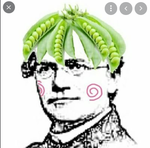
I enjoy Boston as a city, but traveling to other cities is a good reminder of how petite a city it is. Case in point: Chicago. Particularly if you transit by air on a clear night, the enormous nature of the city becomes apparent, reinforced by the Jeffersonian grid of streets.
The size difference extends to some public institutions as well. Boston's Museum of Science is a very good museum, but Chicago splits the same subject matter into three institutions, two of which (Museum of Science & Industry and the Field Museum) are almost certainly larger than the MoS (I've never made it to the Adler Planetarium, so I can't make the comparison there).
Some overlap is to be expected, and so both the MoS&I and the Field have exhibits on genetics. We only dashed through the one at the MoS&I as a shortcut, though I did catch a glimpse of a former Millennium colleague in one of the videos. But the Field's exhibit on Brother Gregor, well that could not be skipped.
The exhibit covers the life and impact of Gregor Mendel, the monk who trained extensively in science but never received a degree there. His pioneering work might never had happened, except he was a failure as a ministering cleric. Among its revelations for me was his extensive efforts in other sciences, such as astronomy. I also had not heard that Mendel had, near the end of his life, been confident that his work had not been in vain. We can also see an all-too-common story in his life: ultimately his scientific efforts were cut off by administrative duties, as he finished his career as abbot of the monastery.
The exhibit had a nice mix of modern elements, reconstructions, and actual artifacts. For the latter, one example was his microscope & slide set! A box with 5K peas (if I remember correctly) showed just how many peas he scored -- in only the first year of experiments! Various computer games attempt to capture the attention of the modern set, such as the genetics project I have had running for seven years. There are also the juicy personal tidbits, such as his habit of throwing dried peas at sleeping students! One other point brought out by the exhibit: how Mendel was a pioneer of combining math with biology.
Like any good exhibit, I found myself leaving with many unanswered questions -- not because the exhibit wasn't well designed, but because it had stoked my curiosity. For example, it mentioned that Francis Galton had performed similar lines of inquiry, which perhaps made him very receptive to Mendel's work once it had been rediscovered. There was also a brief mention of the three scientists who rediscovered Mendel's work. What was truly similar and what was distinct in these five efforts?
The exhibit also touched on, but in very minimal form, the controversy over whether Mendel's numbers were too good. Did he trim his data, or is there some biology going on there? It didn't seem to point out Mendel's luck: he picked seven traits which are unlinked (I think two are very loosely linked, detectable but not easily). Would he have stumbled if two traits had proved partially linked?
Another point to ponder: Mendel published his work in the lowly local journal, but he attempted through correspondence to spread the word further. The exhibit mentions a prominent botanist who politely knocked down Mendel's suggestions, but alas didn't translate the letters (some are on display). A fascinating historical question is who did read Mendel's books: perhaps a check of the lending records of the libraries that received them would be informative (Boston's Public Library is reputedly one; one day I'll try to do this).
It also touched on two of the unpleasant 20th century genetics episodes: Eugenics & Lysenko. The eugenics section notes Galton's fascination with the subject and presents a chilling Nazi poster decrying the resources spent on someone with a genetic 'sickness'. The Lysenko panel notes his impact on Soviet science, the grim penalties for supporting Mendel during Lysenko's reign & the fact that only after Lysenko's death was a commemorative plaque placed at Mendel's monastery.
The exhibit will be at the Field until April, and will then tour a number of other museums (schedule). The tour seems somewhat geographically restricted: nowhere west of the Mississippi. If you can get to it, do so -- you won't be sorry!
Friday, December 15, 2006
Wierd memories from cleaning up
One week left. Time to get serious about the lack of time. One week.
I am a terrible pack rat. I periodically attempt to organize things into folders, but for the most part I use the geologic filing method -- that stratum is roughly October, below that November, below that November (earthquakes & uplifting occur frequently!).
Occasionally my supervisors would crack down (most notably prior to the FDA swinging through the labs one time), but in general there was a better trigger: moving. I was pretty good about lightening up prior to each move. One office lasted 5 years, so there was quite a lot of overburden to deal with that time, but the office one previous to the layoffs was only 2 years and we just moved in the spring. Even at my worst, that's not much time to lay down a mountain. The planners through in one more twist by moving me after the layoffs -- but then again, I was on extended time and they hadn't planned on me being there at all.
However, there was still a lot to go through, with severalmajor categories
We have these big shredder bins which collect stuff for an outside vendor to shred in big trucks -- this is a huge improvement over office shredders, as I always spent more time unjamming them than shredding. It's not efficient to run to the bin each time, so I had a paper grocery bag for batching things. This worked very well -- my four-foot tall unpaid consultant gleefully fed the bins one weekend while I went through papers.
Due to the shortcomings of my system, I came across all sorts of obsolete things. Will I ever again need a serial-to-USB converter? Vendor catalog CD-ROMs from 3 years ago?
On the other hand, some things are really valuable, such as address lists from recent meetings. Others are what I collect too much of but useful: papers that I might want to comment on in this space, old papers I consider really interesting and might refer to.
And, of course, lots goes to recycling or shredding: papers relevant to projects, sequence alignments, snippets of code, etc.
One of the more interesting mixed bags are the business cards, and that's also where I got a strange trip down memory lane. I found some recent ones I thought I had lost, which would have been good contacts to have in my job search (aargh!). Others I couldn't remember at all -- I really should put some context on the back. And finally, I found one from early in my career that I remember vividly.
We had a group (MBio) trying to find the next Epogen and I was the main bioinformatics scientist attached to the group. They were constantly growing & constantly recruiting. I was going to the Hilton Head conference, and the MBio research chief wanted me to screen a candidate: simple enough.
We set up a meeting in one of the hotel bars. The conversation was pleasant, but neither of us seemed to have a strong reaction either way. He wasn't sure he wanted to leave his existing position or take this new one. I reported back to base the equivocal meeting, and moved on.
So it was stunning to see a news item several years later that the same person I had interviewed was the perpetrator of a murder-suicide. I think I saw it on GenomeWeb, but they don't seem to archive very well. I found (via Wikipedia) another item, which adds a truly surreal note about what happened to the pizzas used to lure the victim from her home (you have to read it to believe it).
You meet a lot of unusual people in science, but perhaps you never know -- and never want to -- who are truly outside the norm.
I am a terrible pack rat. I periodically attempt to organize things into folders, but for the most part I use the geologic filing method -- that stratum is roughly October, below that November, below that November (earthquakes & uplifting occur frequently!).
Occasionally my supervisors would crack down (most notably prior to the FDA swinging through the labs one time), but in general there was a better trigger: moving. I was pretty good about lightening up prior to each move. One office lasted 5 years, so there was quite a lot of overburden to deal with that time, but the office one previous to the layoffs was only 2 years and we just moved in the spring. Even at my worst, that's not much time to lay down a mountain. The planners through in one more twist by moving me after the layoffs -- but then again, I was on extended time and they hadn't planned on me being there at all.
However, there was still a lot to go through, with severalmajor categories
- Paper for recycling
- Confidential material to shred
- Items to throw out
- Items to forward within Millennium or return
- Items to bring home or to next position
We have these big shredder bins which collect stuff for an outside vendor to shred in big trucks -- this is a huge improvement over office shredders, as I always spent more time unjamming them than shredding. It's not efficient to run to the bin each time, so I had a paper grocery bag for batching things. This worked very well -- my four-foot tall unpaid consultant gleefully fed the bins one weekend while I went through papers.
Due to the shortcomings of my system, I came across all sorts of obsolete things. Will I ever again need a serial-to-USB converter? Vendor catalog CD-ROMs from 3 years ago?
On the other hand, some things are really valuable, such as address lists from recent meetings. Others are what I collect too much of but useful: papers that I might want to comment on in this space, old papers I consider really interesting and might refer to.
And, of course, lots goes to recycling or shredding: papers relevant to projects, sequence alignments, snippets of code, etc.
One of the more interesting mixed bags are the business cards, and that's also where I got a strange trip down memory lane. I found some recent ones I thought I had lost, which would have been good contacts to have in my job search (aargh!). Others I couldn't remember at all -- I really should put some context on the back. And finally, I found one from early in my career that I remember vividly.
We had a group (MBio) trying to find the next Epogen and I was the main bioinformatics scientist attached to the group. They were constantly growing & constantly recruiting. I was going to the Hilton Head conference, and the MBio research chief wanted me to screen a candidate: simple enough.
We set up a meeting in one of the hotel bars. The conversation was pleasant, but neither of us seemed to have a strong reaction either way. He wasn't sure he wanted to leave his existing position or take this new one. I reported back to base the equivocal meeting, and moved on.
So it was stunning to see a news item several years later that the same person I had interviewed was the perpetrator of a murder-suicide. I think I saw it on GenomeWeb, but they don't seem to archive very well. I found (via Wikipedia) another item, which adds a truly surreal note about what happened to the pizzas used to lure the victim from her home (you have to read it to believe it).
You meet a lot of unusual people in science, but perhaps you never know -- and never want to -- who are truly outside the norm.
Friday, December 01, 2006
Dead Manuscripts #0
When Millennium originally cleaned house, I thought I would be idled almost immediately & this blog was one new initiative to maintain my sanity during the downtime. But then, thanks to some campaigning by friendly middle managers, I was given an extension until end-of-year. It's nice, since it gives me a little more time to hand-off a couple of projects to people.
But, there's still a lot of time left over, and so like Derek Lowe I find myself trying to cobble together some manuscripts before I go.
Now the problem here is that I tend to think I have a lot of interesting stuff to publish -- until I actually get going. It's serious work preparing something for publication. Plus, sometimes when you start dotting the i's and crossing the t's your results start looking less and less attractive.
I am trying to tackle too many papers, especially since all but one are solo affairs. So it will be time to cull some of the ideas soon. There's also stuff that previously stalled somewhere along the way & I doubt I'll ever resurrect. One was even submitted -- and rejected; I found myself agreeing with half the reviewer's comments about the quality of the writing.
Normally, these just go back into memory as items to trot out if they answer questions in interviews ("oh, yes , I once did a multiple alignment of llama GPCRs..."). But now, I have a place to unleash them on the world! I'm the editor & review board! (& 1/10th the readership? :-) Perhaps some of the nuggets will be useful to someone, and perhaps some will even be worked up by someone else into a full paper.
A lot of these little items are interesting, but not quite a Minimum Publishable Unit, or MPU. In academia, there are often debates as to the minimum content of a paper, and some authors push to publish no more than an MPU. Others go in the opposite direction: you need to read every last footnote in one of George Church's papers to get all the stuff he tries to cram in. For example, Craig Venter was the first to succeed at whole genome shotgun sequencing in 1995, but George was trying it back in 1988: see the footnotes to his multiplex sequencing paper.
I almost killed one idea today, but alas I figured out one more question to ask of the data. I'll do that, but I really should kill this one. It's the one where I'm skating way outside my recognized expertise and the results are useful but not stunning. The clock is ticking away, and it would be better to wrap up one good story than have 4 manuscript fragments to add to the queue for this space.
But, there's still a lot of time left over, and so like Derek Lowe I find myself trying to cobble together some manuscripts before I go.
Now the problem here is that I tend to think I have a lot of interesting stuff to publish -- until I actually get going. It's serious work preparing something for publication. Plus, sometimes when you start dotting the i's and crossing the t's your results start looking less and less attractive.
I am trying to tackle too many papers, especially since all but one are solo affairs. So it will be time to cull some of the ideas soon. There's also stuff that previously stalled somewhere along the way & I doubt I'll ever resurrect. One was even submitted -- and rejected; I found myself agreeing with half the reviewer's comments about the quality of the writing.
Normally, these just go back into memory as items to trot out if they answer questions in interviews ("oh, yes , I once did a multiple alignment of llama GPCRs..."). But now, I have a place to unleash them on the world! I'm the editor & review board! (& 1/10th the readership? :-) Perhaps some of the nuggets will be useful to someone, and perhaps some will even be worked up by someone else into a full paper.
A lot of these little items are interesting, but not quite a Minimum Publishable Unit, or MPU. In academia, there are often debates as to the minimum content of a paper, and some authors push to publish no more than an MPU. Others go in the opposite direction: you need to read every last footnote in one of George Church's papers to get all the stuff he tries to cram in. For example, Craig Venter was the first to succeed at whole genome shotgun sequencing in 1995, but George was trying it back in 1988: see the footnotes to his multiplex sequencing paper.
I almost killed one idea today, but alas I figured out one more question to ask of the data. I'll do that, but I really should kill this one. It's the one where I'm skating way outside my recognized expertise and the results are useful but not stunning. The clock is ticking away, and it would be better to wrap up one good story than have 4 manuscript fragments to add to the queue for this space.
Wednesday, November 29, 2006
Phage Renaissance
Bacteriophage, or phage, occupy an exalted place in the history of modern biology. Hershey & Chase used phage to nail down DNA (and not protein) as the genetic material. Benzer pushed genetic mapping to the nucleotide level. And much, much more. Phage could be made in huge numbers, to scan for rare events. Great stuff, and even better that so many of the classic papers are freely available online!
Phage have also been great toolkits for molecular biology. First, various enzymes were purified, many still in use today. Later, whole phage machinery were borrowed to move DNA segments around.
Two of the best studied phage are T7 and lambda. Both have a lot of great history, and both have recently undergone very interesting makeovers.
T7 is a lytic phage; after infection it simply starts multiplying and soon lyses (breaks open) its host. T7 provided an interesting early computational conumdrum, one which I believe is still unsolved. Tom Schneider has an elegant theory about information and molecular biology, which can be summarized as locational codes contain only as much information as they need to be located uniquely in a genome, no more, no less. Testing on a number of promoters suggested the theory valid. However, a sore thumb stuck out: T7 promoters contain far more information than the theory called for, and a clever early artificial evolution approach showed that this information really wasn't needed by T7 RNA polymerase. So why is there more conservation than 'necessary'? It's still a mystery.
Phage lambda follows a very different lifestyle. After infection, most times it goes under deep cover, embedding itself at a single location in its E.coli host's genome, a state called lysogeny. But when the going gets tight, the phage get going and go through a lytic phase much like that of T7. The molecular circuitry responsible for this bistable system was one of the first complex genetic systems elucidated in detail. Mark Ptashne's book on this, A Genetic Switch, should be part of the Western canon -- if you haven't read it, go do so! (Amazon link)
With classical molecular biology techniques, only either modest tinkering or wholesale vandalism were the only really practical ways to play with a phage genome. You could rewrite a little or delete a lot. Despite that, it is possible to do a lot with these approaches. In today's PNAS preprint section (alas, you'll need a subscription to get beyond the abstract) is a paper which re-engineers the classic lambda switch machinery. The two key repressors, CI and Cro, are replaced with two other well-studied repressors whose activity can be controlled chemically, LacI and TetR. Appropriate operator sites for these repressors were installed in the correct places. In theory, the new circuit should perform the same lytic-lysogeny switch as lambdaphage 1.0, except now under the control of tetracycline (TetR, replacing CI) and lactose (LacI, replacing Cro). Of course, things don't always turn out as planned.
Even better, with the advent of cheap synthesis of short DNA fragments ("oligos") and new methods of putting those together, the possibility of becoming the "all the phage that's fit to print" is really here. This new field of "synthetic biology" offers all sorts of new experimental options, and of course a new set of potential misuses. Disclosure: my next posting might be with one such company.
Such rewrites are starting to show up. Last year one team reported rewriting T7. Why rewrite? A key challenge in trying to dissect the functions of viral genes is that many viral genes overlap. Such genetic compression is common in small genomes, and gets more impressive the smaller the genome. But, if tinkering with one gene also tweaks one or more of its neighbors, interpreting the results becomes very hard. So by rewriting the whole genome to eliminate overlaps, cleaner functional analysis should be possible.
With genome editing becoming a reality, perhaps it's time to start writing a genetic version of Strunk & White :-)
Phage have also been great toolkits for molecular biology. First, various enzymes were purified, many still in use today. Later, whole phage machinery were borrowed to move DNA segments around.
Two of the best studied phage are T7 and lambda. Both have a lot of great history, and both have recently undergone very interesting makeovers.
T7 is a lytic phage; after infection it simply starts multiplying and soon lyses (breaks open) its host. T7 provided an interesting early computational conumdrum, one which I believe is still unsolved. Tom Schneider has an elegant theory about information and molecular biology, which can be summarized as locational codes contain only as much information as they need to be located uniquely in a genome, no more, no less. Testing on a number of promoters suggested the theory valid. However, a sore thumb stuck out: T7 promoters contain far more information than the theory called for, and a clever early artificial evolution approach showed that this information really wasn't needed by T7 RNA polymerase. So why is there more conservation than 'necessary'? It's still a mystery.
Phage lambda follows a very different lifestyle. After infection, most times it goes under deep cover, embedding itself at a single location in its E.coli host's genome, a state called lysogeny. But when the going gets tight, the phage get going and go through a lytic phase much like that of T7. The molecular circuitry responsible for this bistable system was one of the first complex genetic systems elucidated in detail. Mark Ptashne's book on this, A Genetic Switch, should be part of the Western canon -- if you haven't read it, go do so! (Amazon link)
With classical molecular biology techniques, only either modest tinkering or wholesale vandalism were the only really practical ways to play with a phage genome. You could rewrite a little or delete a lot. Despite that, it is possible to do a lot with these approaches. In today's PNAS preprint section (alas, you'll need a subscription to get beyond the abstract) is a paper which re-engineers the classic lambda switch machinery. The two key repressors, CI and Cro, are replaced with two other well-studied repressors whose activity can be controlled chemically, LacI and TetR. Appropriate operator sites for these repressors were installed in the correct places. In theory, the new circuit should perform the same lytic-lysogeny switch as lambdaphage 1.0, except now under the control of tetracycline (TetR, replacing CI) and lactose (LacI, replacing Cro). Of course, things don't always turn out as planned.
These variants grew lytically and formed stable lysogens. Lysogens underwent prophage induction upon addition of a ligand that weakens binding by the Tet repressor. Strikingly, however, addition of a ligand that weakens binding by Lac repressor also induced lysogens. This finding indicates that Lac repressor was present in the lysogens and was necessary for stable lysogeny. Therefore, these isolates had an altered wiring diagram from that of lambda.. When theory fails to predict, new science lies ahead!
Even better, with the advent of cheap synthesis of short DNA fragments ("oligos") and new methods of putting those together, the possibility of becoming the "all the phage that's fit to print" is really here. This new field of "synthetic biology" offers all sorts of new experimental options, and of course a new set of potential misuses. Disclosure: my next posting might be with one such company.
Such rewrites are starting to show up. Last year one team reported rewriting T7. Why rewrite? A key challenge in trying to dissect the functions of viral genes is that many viral genes overlap. Such genetic compression is common in small genomes, and gets more impressive the smaller the genome. But, if tinkering with one gene also tweaks one or more of its neighbors, interpreting the results becomes very hard. So by rewriting the whole genome to eliminate overlaps, cleaner functional analysis should be possible.
With genome editing becoming a reality, perhaps it's time to start writing a genetic version of Strunk & White :-)
Friday, November 10, 2006
Hairy Business
In addition to the sea urchin genome papers, the new Science also contains an article describing the positional cloning of a mutant gene resulting in hair loss. The gene encodes an enzyme which is now presumed to play a critical role in the health of hair follicles.
The first round of genomics companies had two basic scientific strategies. Companies such as Incyte and Human Genome Sciences planned to sequence the expressed genes & some how sift out the good stuff. Another set of companies, such as Millennium, Sequana, Myriad and Mercator planned to find important genes through positional cloning. Positional cloning uses either carefully collected human family samples or carefully bred mice to identify regions of the genome that track with the trait of interest. By progressively refining the resolution of the genetic maps, the work could narrow down the region to something that could be sequenced. Further arduous screening of the genes in that region for mutations which tracked with the trait would eventually nail down the gene. Prior to the human genome sequence this was a long & difficult process, and sometimes in the end not all the ambiguity could be squeezed out. It is still serious work, but the full human genome sequence and tools such as gene mapping chips make things much cheaper & easier.
Instead, it seemed like every one of the positional cloning companies picked new indications -- obesity, diabetes, depression, schizophrenia, etc. -- and generally the same ones. This set up heated rivalries to collect families, find genes, submit patents & publish papers. Sequana & Millennium were locking horns frequently when I first showed up at the latter. If memory serves, on the hotly contested genes it was pretty much a draw -- each sometimes beating the other to the prize.
Eventually, all of the positional cloning companies discovered that while they could achieve scientific success, it wasn't easy to convert that science into medical reality. Most of the cloned genes turned out to be not easily recognizable in terms of their function, and certainly not members of the elite fraternity of proteins known as 'druggable targets' -- the types of proteins the pharmaceutical industry has had success at creating small molecules (e.g. pills) to target. A few of the genes found were candidates for protein replacement therapy -- the strategy which has made Genzyme very rich -- but these were rare. Off-hand, I can't think of a therapeutic arising from one of these corporate positional cloning efforts that even made it to trials (anyone know if this is correct?).
Before long, the positional cloning companies either moved into ESTs & beyond (as Millennium did) or disappeared through mergers or even just shutting down.
I'm reminded of all this by the Science paper because hair loss was one area that wasn't targeted by these companies -- although the grapevine said that every one of them considered it. The commercial success of Rogaine made it an attractive area commercially, and there was certainly a suggestion of a strong genetic component.
If a company had pursued the route that led to the Science paper, it probably would have been one more commercial disappointment. While the gene encodes an enzyme (druggable), the hairless version is a loss-of-function mutant -- and small molecules targeting enzymes reduce their function. The protein isn't an obvious candidate for replacement therapy either. So, no quick fix. The results will certainly lead to a better understanding of what makes hair grow, but only after lots of work tying this gene into a larger pathway.
As for me, I'm hoping I inherited my hair genes from my maternal grandfather, who had quite a bit on his head even into his 90's, rather than my father's side, where nature is not quite so generous. As for urchins, I learned to avoid them after a close encounter on my honeymoon. I was lucky the hotel had a staff doctor, but I discovered on my return to the States that we had missed one & perhaps I still carry a little product of the sea urchin genome around in my leg.
Subscribe to:
Posts (Atom)