Thursday, October 06, 2022

General Inception Aims to Ignite New Company Formation

A week ago, a company calling itself General Inception emerged from stealth as a new concept, which they call an “Igniter company”, to promote the formation of new life sciences company.  As described to me in a phone conversation with General Inception CEO Paul Conley, General Inception provides a range of science and business expertise and support to enable embryonic ideas to condense into functional startups.  


The igniter metaphor Conley offered me is the spark plug of a car: it is required to start the engine and continues to provide a key part of the functioning whole.  Conley extended this to say that General Inception plans to go for the ride, but let the scientific founders occupy the driver’s seat.  But another ignition metaphor occurred to me, the skill of turning a tiny spark from flint and steel into a raging campfire.  Without careful nurturing, most tiny sparks will never ignite a blaze; only with careful and staged addition of oxygen and fuel does this reliably occur.


General Inception is not a fund, Conley stressed, but structured as a corporation. The ultimate goal is to make systematic and reproducible the generally artisanal craft of discovering and nurturing new ideas – as well as sometimes terminating efforts early that do not appear successful.  


So what does General Inception offer?  First, some of the boring business functions such as quotidian finance functions such as paying bills.  Also a wide range of expertise, from access to technical experts in a diverse set of biological disciplines to persons familiar with estimating markets and development paths. General Inception has lined up Contract Research Organizations and Contract Manufacturing Organizations, but not just as contract partners – General Inception has “meaningful” equity stakes and perhaps board seats in these companies.  A key goal of General Inception is to identify key experiments which can be run quickly at these partners to test project concepts.  This might be simply reproducing results from an academic lab or perhaps running a key experiment to de-risk the project.  An example of a CRO partner is Triple Ring Technologies, which offers company incubator services and facilities both in the San Francisco Bay and Boston areas.


Interestingly, General Inception is casting a very wide net.  Any life science concept is potentially a target: therapeutics, diagnostics, tool companies, agriculture, synthetic biology or whatever else is centered around biotechnology.  Within the company there are defined practice areas: Tools & Diagnostics; Cell Engineering & Synthetic Biology; Therapeutics.  But these are intended not to be siloed fiefdoms but rather foci which overlap each other and reinforce each other. After all, so many technologies are converging - a diagnostic may require synthetic biology or a therapeutic cell engineering.  Conley believes human health will continue to grow – but non-health life sciences might grow even faster and overtake healthcare in terms of total economic value, so he is positioning the company to support company formation in all areas.


In terms of geography, not only are they scouring US labs but also in Europe.  In the latter case, the companies that emerge might have R&D remaining in Europe but commercial operations headquartered in the US.  Conley says the venture environment in Europe remains more conservative than the US, so General Inception can make a particularly large impact in Europe by helping ideas cross “the valley of death” to where a venture firm is comfortable investing in it.


Not only is General Inception stalking the halls of academia, but they are also talking to existing companies about dormant assets that might find new life in a startup. And General Inception hopes to form long-term relationships with innovators; having an idea fail early won’t be held as a demerit against the academic.  


In terms of deal structures, General Inception looks to set themselves up as a founder, with founder’s common stock.  Generally they would be funding companies at the seed or pre-see stage, perhaps taking the place of angel investors or “friends and family” investments.  Venture capital firms often demand preferred stock, which gives them first rights to the financial carcass of failed ventures - General Inception will be taking the same risk as scientific founders of not getting anything from liquidated companies.  


General Inception itself has raised $60M from a set of venture capital firms. Their goal is to reach a steady state in which around 25 companies are seeded and graduated annually. General Inception also sees itself as evolving to an information business – with a large experience base of startups they hope to glean new insights into predicting what ideas work and finding the best company structures to maximize the chance of success.  Venture firms that invest in General Inception will have early access to companies incubated by the company.  Conley has been piloting the company since February 2020, refining the approach and the set of expert resources which General Inception can draw on


In my career I’ve interacted with startups in a variety of contexts - as a potential employee or consultant, an actual employee or consultant and as a potential or actual partner.  I’ve also daydreamed a rough business plan or two.  I will be the first to proffer that this is hardly a comprehensive exposure to the variety of ways that companies are seeded.  Thinking back on experiences such as Warp Drive, I can see the value of quick proof-of-concept experiments to either validate a company or simply nip off an idea that is unlikely to ever bear fruit – but I also know how complicated it can be to identify such experiments or assemble all the components to perform such an experiment.  So I’m intrigued by General Inception and wish them well, though I reserve a certain amount of skepticism that starting new companies will ever be anything other than artisanal.


Monday, October 03, 2022

Illumina Roadmap Part 2: Infinity Becomes Illumina Complete Long Reads

The Only Thing Clear About Infinity Is It Is Now Complete Long Reads. 
Illumina told us a new name for Infinity -- Illumina Complete Long Reads -- and an initial pair of products, but didn't reveal anything new about the underlying tech.  They threw out a number of claims, but very vague ones.  Particularly confusing is that it "isn't synthetic reads".  If not, then what is it?  

Wednesday, September 21, 2022

Notes From Coffee With MGI

A couple of weeks ago  I sat down for coffee with a pair of MGI representatives - American Region CEO Yongwei Zhang and Director, Global Business Development Damon Zhang. Since I hadn’t been at AGBT 2022 (my 2023 application already filed!). Yongwei and I had planned to try to catch up the next time he was in Boston area, so I braved our current subway issues (not one, but two major lines shut for extended maintenance!) and covered a range of topics.

Tuesday, August 23, 2022

SRA Entries Should Not Ever Disappear Into Thin Air

I ran into an annoying problem last night and was quite steamed, but had the discipline to wait until morning to vent publicly about it.  Now I'm more in a morose mood on the subject, not furious but still quite frustrated. The quick version of what happened is I'm belatedly trying to go through some nicely documented reproducible analysis code to explore some concerns I have with the analysis, and the code is working on an SRA entry -- and that SRA entry is the entire point of the analysis. And that SRA entry which I know once existed now doesn't - other than this code and the preprint to go with it, it's as though it never existed -- which is terrible.  And I'm irritated with everyone who contributed to that terrible result, starting with NCBI

Tuesday, August 16, 2022

Supply Stall Slows Singular

Singular Genomics reported earnings last week and delivered an unpleasant surprise: inability of suppliers to make timely deliveries of key (but unspecified) hardware components have slowed G4 instrument production to a very slow crawl.  Given the lively competition in the desktop short read space, this is a serious setback for Singular's commercial launch.  

Thursday, June 23, 2022

AGBT 2022: Overhanging Questions

AGBT broke up a couple of weeks ago and I've failed to write anything here so far.  It was frustrating not attending, but not registering for a meeting in February seemed prudent given the pattern of COVID waves - I hadn't considered (nor would have wanted to bank on) AGBT organizers reacting so well and rescheduling the meeting.  It sounds like a number of attendees did catch the virus at the meeting -- though I'm presumably still quite protected by my infection a month earlier.  Anyways, I'm going to organize this around one to two questions that hover in my head for the different sequencing providers.  AGBT also had a strong spatial angle, but I feel ill-equipped to cover that in the absence of being on the scene -- I don't work with spatial data and so don't have a deep feel for it.  As always, please flag me here or on Twitter or by email for any errors I made -- or any juicy sequencing company gossip you wish to share!

Wednesday, June 08, 2022

Admin: Feedburner to Follow.it Switch

A bit over a year ago Google made one of their dreaded announcements that they would be slowly killing off one of their acquisitions, in this case FeedBurner.  Well over a thousand of you have been using FeedBurner to follow me via email.  Follow.it has a wonderful free plan that can take over all of the previous functionality and I could just import the old subscription list

Tuesday, May 31, 2022

Ultima Genomics Storms Out Of Stealth Promising $1/Gigabase Short Reads

To date, the new entrants targeting Illumina’s short read business have been aiming at the middle of Illumina’s range, trying to take on NextSeq.  Element Biosciences is touting high accuracy for a low price.  Omniome (now PacBio) also has positioned itself to tout accuracy.  Singular Genomics is claiming to enable great flexibility and fast runs.  But all aimed at NextSeq.  As part of the run up to AGBT another company is decloaking from stealth mode: Ultima Genomics, however they are going not after NextSeq but full throttle after Illumina’s pinnacle, the NovaSeq running the S4 flowcell.  The value proposition is a large sequencing device that delivers S4 output at S1 prices for an overall cost of $1 per gigabase.  Note that the interview for this piece was conducted under a CDA and Ultima reviewed my copy for accuracy and to ensure I didn’t disclose anything they had marked confidential.  They were nice enough to offer to have me fly out to their facility, but I was forced by the damn coronavirus to cancel those plans the night before the trip. A preprint summarizing the technology is also out in bioRxiv.  A trio of additional preprints have popped up as well, describing its application to generate a huge methylation sequencing dataset around colorectal adenocarcinoma, a huge Perturb-Seq dataset and for large scale single cell RNA-Seq.


Ultima isn’t planning on truly launching until early next year, but they’re well on the way with paying early access customers.  Indeed, AGBT will feature multiple posters and talks describing the use of the Ultima instrument for a variety of genomics tasks.  And Ultima is confident that their architecture will support significant increases in future throughput, enabling per base costs to go even lower.


Ultima’s chemistry is flow based - using unterminated but fluorescently labeled nucleotides.  Only a fraction of the nucleotides are labeled in each reaction, reducing the reagent costs and minimizing molecular scar accumulation.  The reactions take place on beads whose templates are amplified via emulsion PCR - though for all the ePCR-haters out there Ultima will include a fully automated benchtop ePCR robot.  Once primed, the beads retain the DNA polymerase, so this expensive component can be conserved between flows.  The instrument is a single end reader – no paired ends – but substitutes for that by reads with a modal read length of around 300 bases, which should be enough to plow all the way across most short read inserts and their associated molecular indices.


The use of unterminated nucleotides has typically meant challenges in resolving homopolymers.  Ultima is tuning their system to call homopolymers of up to 12 bases; via discussions with customers and their own experience accurate counting of longer homopolymers is deemed insufficiently valuable to focus on vs. other design tradeoffs.  


But Ultima has found several ways in which unterminated flow chemistry can either have its weaknesses ameliorated or become downright boons.  First, while it can’t accurately measure long homopolymers it can go straight through very long ones in a single extension cycle – so poly-A tails in cDNA ends can be easily blitzed through.  This helps ensure reading all the way through inserts of things like single cell libraries.  Second, for short homopolymers Ultima embeds in the Q-scores a probability matrix of the length – basically the odds of minus one and plus one versions of the sequence.  This is leveraged by their customized version of GATK, developed with the Broad Institute.  Third, is a clever approach of “cycle shift variant calling” that I’m still stunned has never appeared in the literature for any other flow chemistry – 454, Ion Torrent or Genapsys.  Cycle shift uses the known order of flows to increase the confidence in variant calls – particularly variable for low coverage data such as cell-free DNA.  


Another key driver of low cost and high density is the use of a spinning, open “flow cell” (really a 200mm diameter wafer) for both reagent addition and imaging.  Centrifugal force generated by the spinning (fake force, ha!) distributes the reagents as a very thin film, minimizing wastage.  Imaging as the wafer spins enables shooting many tiles without having to repeatedly accelerate and decelerate the flowcell as a rectilinear scanning scheme must do.  The speed difference adds up: Ultima can generate in 20 hours the same 3 terabases (10 billion reads of roughly 300 bases each)  as a NovaSeq S4, but an S4 requires 44 hours to run – and Ultima believes they can shave that down to 16 hours.  Faster cycle times means more runs per instrument – and each instrument runs two wafers simultaneously, each with its own chemistry station but sharing imaging path  The instrument features tanks for reagents which can be refilled, with a 24 hour capacity of each reagent.  Six different wafers can be queued for running, with built-in automation removing spent wafers and swapping in new wafers with new library pools.  


How might the system grow its output?  The patterned wafers place the beads at a very conservative pitch.  Larger diameter wafers are also a possible further option. Extending the read lengths is yet another possible expansion direction.


The instrument has onboard GPU compute power, which is currently used for basecalling and alignment and could ultimately also perform the variant calling work.  


Current accuracy is 0.1% error for substitutions and 0.5% for indels.  Most of the indel error is concentrated in homopolymers greater than 8, with calling capped at 12.  When used with the specially modified GATK co-developed with the Broad, or other custom DeepVariant or Sentieon pipelines, SNP calling accuracy of 99.7% precision, 99.7% recall is achieved and indel recall and precision range from 96-98% for small indels (excluding long homopolymers and low complexity regions).  Accuracy suffers in low complexity regions, which Ultima believes is an amplification chemistry not sequencing chemistry issue and they believe they can significantly improve on the current performance.  


Ultima plans to offer their own kits for PCR-free and PCR-based sheared genomic libraries.  Libraries for other systems can be converted by a simple indexing PCR scheme - this has been done for TruSeq libraries and proof-of-concept experiments have been run for Nextera libraries.  


What could be done with such an instrument?  A pending publication uses Ultima and Illumina in parallel on the same 4 million cell Perturb-Seq experiment and finds the results equivalent between the platforms.  A large fraction of the Phase IV ENCODE HiC data was generated on Ultima.  An internal proof-of-concept experiment utilized deep sequencing RNA from COVID-19 infected samples, recovering complete viral genomes after only ribosomal RNA depletion.  One of the AGBT abstracts demonstrates the ability of Ultima WGS to detect minimal residual disease at low levels by deep WGS of cell-free DNA, an approach academia and startups are actively exploring.  Additional AGBT abstracts describe population genetics studies, oncology, and rare disease sequencing.  Ultima has 10 paying Early Access customers, with 7 instruments installed to date – and these run the gamut from large academic genome centers to biopharma to government labs.  They hope to have “well into double digits” customers at the time of the official launch.


To get here Ultima has raised over $550 million dollars and hired over 350 employees.  The company has made steady progress from their start in 2016.  . Ultima CSO Doron Lipson previously was part of the teams at Helicos and Foundation Medicine, so he has extensive experience both in building a sequencing platform and applying it at scale. CEO Gilad Almogy has spent many years in the semiconductor manufacturing field - Ultima’s reaction wafers are patterned atop silicon substrates and the semiconductor industry also uses very high precision optical methods for both manufacturing and quality control.  


Illumina for a long time now has had an unassailed position as leader in sequencing in the US market as well as others.  Now that position is under pressure from all sides: Element and Singular are trying to squeeze the NextSeq market while Ultima is aiming for the top; Oxford Nanopore thinks their “short fragment mode” can compete as well and the patent shackles are being lifted from BGI.  At JP Morgan in January Illumina said their “Chemistry X” would offer improvements in accuracy, read length and output, but absolutely no details have been forthcoming – and in particular whether new instruments will be required to access Chemistry X benefits.  Perhaps the entry of Ultima and the others will add some urgency to Illumina communicating their future plans, lest customers start planning in earnest to opt for the new platforms


For we consumers of sequence data, more competition and lower prices are a pure good. Projects can continue to be increasingly ambitious and simply the number of different phenomena which can be converted into a sequence measurement constantly grows.  More for less is never, ever going to become boring – it will always be enabling.  After a long period of very shallow slope in the notorious “better than Moore’s Law” slide, we appear to be entering a new period of plunging sequencing costs.  Time to start making plans to take advantage of it!


[20220608 corrected really embarrassing millions typo (should have been billions) which has been requoted all over Twitter]

Monday, May 23, 2022

London Calling 2022: Peptide Sequencing

London Calling was last week and Clive Brown's big revelation was a peek at Oxford Nanopore's progress on enabling peptide sequencing on the platform.  Peptide sequencing and identification is a hot area right now, with multiple startups looking to provide alternatives to mass spectrometry approaches.  Clive stressed that the technology is very early in development.  It's definitely a clever fork of the existing DNA sequencing technology.  However, it also illustrates a significant organizational challenge which Oxford. So I'm going to spend a post focused on this while I figure out how to slice up the rest of the meeting.

Friday, April 15, 2022

Nanopore Knights' Notes

Clive Brown gave a "mezzanine" update on Oxford Nanopore just over two weeks ago titled "The Knights Who Say Me".  Clive reiterated a lot of prior guidance but did make a few announcements that are relevant to the ongoing history of the Oxford Nanopore platform - and blessedly, he omitted for time's sake a deep coverage of that history or the usual Nanopore 101 tutorial.    In particular, two long-time components of the platform are now headed for the exits.

Thursday, March 31, 2022

The End of the Beginning of Human Genome Sequencing?

Today in Science a slew of papers have been published from the Telomere-to-Telomere (T2T) Consortium.  The flagship paper details the generation of a complete genome assembly from a Complete Hydatiform Mole (CHM) cell line which is telomere-to-telomere for all 22 autosomes plus X (assembly T2T-CHM13); the companion papers apply this groundbreaking assembly to a number of biological questions.  PacBio CSO Jonas Korlach and I chatted yesterday about the PacBio contribution to the flagship as well as two of the other papers, as well as another T2T preprint on automated assembly and a related paper from Heng Li and colleagues that recently appeared in Nature Biotechnology.  I did not have advance access to the T2T paper but it had appeared in preprint form and Jonas assured me that no substantial information was added in the published version. 

Monday, March 14, 2022

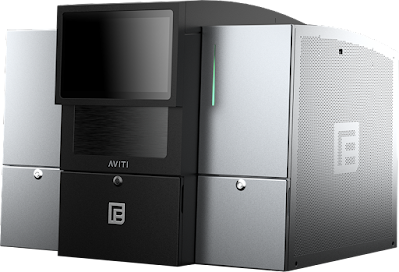
Element Unveils AVITI

Element Biosciences is launching their AVITI sequencing system today in a blitz of events.  At February’s end they flew me out to visit their San Diego facility and gave me quite amazing access to senior staff, Board of Directors members for an entire day of discussions. They even videotaped me! 


Many of those discussions got deep into technical weeds in a most enjoyable manner.  But for those wishing to jump straight to key details, AVITI is a desktop instrument priced at $289K, a bit below NextSeq 2000, which can run two flowcells entirely independently; two sequencers for the space and outlay of one.  At a cost of $1680  of consumables a user can generate 800 million reads in 2x150 format in 48 hours – or about 5-7 dollars per gigabase if running around specifications.  Element believes their projected yield can be very reliably reached, with many runs over 1 billion reads.  Element disclosed today three beta test sites: HudsonAlpha, the Broad Institute and Stanford.


As I’ll detail farther down, Element has partnered with multiple leading library preparation companies to enable a wide array of sequencing applications and will also offer a kit to convert Illumina libraries.  They’ve also started partnering with bioinformatics tools providers.


Surfaces & Polonies

Let’s start with something I don’t generally think much about: flowcell surfaces.  They’re really, really passionate about “contrast to noise ” at Element, which is basically interchangeable with “signal to noise”.  Whichever way you arrange the equation, it’s about maximizing signal and minimizing non-signal.  And that all starts with a surface.


As they described it, the quest for the perfect surface first means making a surface with absolutely no background - perfectly passivated as they describe it.  So many iterations were tried until they had what seemed like the Vantablack of flowcell surfaces.


But such perfection is a bit of a paradox: just as a non-stick coating must adhere to a pan, the monotonous passivation perfection of the surface must be specifically modified to enable signal to occur.  So further rounds of iteration, trying to provide attachment sites while minimally degrading perfect nothingness.


I asked whether the flowcells is patterned, and it isn’t.  And furthermore any sort of patterning such as wells brings in even more inhomogeneity, more risk of enabling noise to latch on.  Edges and corners are all special and different - and so at risk of generating background signal.  


Once you have attachment sites one must prepare and attach polonies there  So a next challenge was forming polonies in a reliably orderly fashion; it sounds as if Element could fill a modern art gallery with images of polony growth gone awry, but after many iterations a workable polony generation protocol emerged

Library Molecules

Library molecules for AVITI are circles and amplified by a rolling circle mechanism.  Figuring out a paired end chemistry came next, and apparently gave the team great worries that they couldn’t get a robust system to work – but eventually they found one. Element and external collaborators have demonstrated nearly no index hopping and very low polony duplication rates, both sometimes frustrating on Illumina platforms particularly on newer instruments using Exclusion Amplification.


I asked about the insert size range that Element’s polony technology can support.  Element has focused on typical short read library insert sizes of a few hundred bases.  They didn’t believe that very short inserts (such as for micro-RNA or something like Swab-Seq) would be a problem but haven’t explored it.  On the long end they haven’t looked either.


Circular library molecules guarantees not being able to just squirt Illumina libraries on, but Element will offer a conversion kit, albeit with a roughly 2:1 exchange rate unfavorable to Element – if your prep previously made exactly one run’s worth of library you’ll now need twice as much starting material.  But most users will probably take advantage of native kits.  On my visit day  Element announced partnerships with QIAGEN, Agilent, NEB, Roche(Kapa) and Watchmaker for library kits, and in the following days they added Dovetail Genomics and 10X Genomics.  Plus JumpCode Genomic’s ribosomal RNA and other abundant RNA depletion reagents.  So a very wide array of sequencing applications will be natively supported on AVITI from the beginning.


Element also announced recently acquisition of Loop Genomics, which has a synthetic read technology that they sell in two forms.  One kit (Solo)  is intended to replace Sanger sequencing of individual clones and the other works on pools of sequences such as 16S amplicon pools.  Interestingly, Element has no plans to discontinue Loop kits for existing platforms.  The Loop acquisition has also meant less drive to explore longer reads or longer inserts; for these Loop is seen as the solution

Sequencing Chemistry

Once you have a library sprouted as polonies on the flowcell, how does the chemistry work?  It’s an interesting twist on reversible terminator chemistry in which each position is probed twice, once with labels and the polymerase unable to extend and once with unlabeled reversible terminators to march the polony one base forwards.  It also leads to an interesting philosophical question as to whether this is sequencing-by-synthesis.  On one hand single base extension is an integral part of the sequencing cycle; on the other the base extension step is not what generates the signal used to resolve the sequence.  In my own taxonomy, it is definitely cyclic chemistry with optical detection running on clonal molecules sitting on a surface – and I suppose I would vote to create binding as yet another mode since that is the detection step.


The beauty of this polymerase two step is in the labeled nucleotides.  These are not loose nucleotides but rather multiple nucleotides are connected by linkers to a core which in turn is linked to the actual labels.  What’s so clever about this is that each nucleotide interacts extremely weakly with polymerase, since it can’t be covalently linked to the precursor  chain.  So only if many such weak binding events happen will signal occur.  Hence the term “sequencing by avidity.  


These  spider-shaped molecules, which the Element team refers to in conversation as “Avidites” offer many grounds for optimization – linker lengths, number of labels on the Avidite core, etc.  But from a chemical standpoint they’re wonderfully modular, so it’s straightforward to experiment with one section without requiring any synthesis changes on other regions – the chemical equivalent of encapsulation in software engineering. Plus the fluor isn’t up close to the DNA, which means it is less likely to generate any sort of photodamage.


Since one is relying on  Avidites aggregating many small interactions into a large net interaction, the concentration of  Avidites need not be very high – nanomolar versus micromolar levels more typical for sequencing reagents.  That means less expensive reagent being used in each cycle - comment was made that in typical sequencing reactions the color of reagent going in is same as that of the waste because only an infinitesimal amount of reagent is actually incorporated into  growing strands.  Low concentrations  also means less likelihood of reagent sticking non-specifically to the flowcell.


One consequence of the avidity approach  is that loss of phase results in only a very weak and slow growing background.  Particularly in early cycles, within each polony dephased molecules will be few and on average widely separated.  Hence wrong Avidite arms won’t make sufficient interactions to loiter and be detected.


At this time Element is offering only 2x150 kits, but with Q40 early in the read gliding down to Q30 at 150 bases.  I asked if they could go longer: CEO Molly He replied that they think the core market is centered on 2x150 but they will monitor demand.   Molly thinks Element is only at the beginning of exploring the new Avidity chemistry with many avenues to explore to obtain significant further optimization.  With the existing quality score pattern, I do wonder if there are some select applications - such as sequencing long simple repeats for repeat expansion disorder research - that could leverage much longer reads using Element’s chemistry.


A single chemistry kit means a streamlined inventory for Element and for customers.  It is indeed nice to be able to save money by ordering less expensive kits for applications that require less data, but often those savings evaporate when you find yourself with a glut of about to expire kits that don’t match your immediate applications.  Actual read lengths can be adjusted in software and there will also be an option to scan only portions of the two channel flowcell to shorten total run time.  CEO Molly He also believes that overall runtime can be shortened; it is set conservatively for a smooth launch but further optimization might shave time off each cycle.


Remarkably this all came together quickly, about 4 years from first acquiring lab space to an externally validated DNA sequencer.This included some nice breaks such as writing specifications for a camera and then inventing a much better one with a wider field of view and with less distortion around the edges than had been originally anticipated, enabling more polonies to be imaged with each exposure.  Element also developed  a new primary analysis algorithm for highly  accurate base-calling of high density polonies.


Element is keeping most consumable manufacturing in house.  Growth has led to three sites in the La Jolla area and one research station in the Bay Area, but the La Jolla sites will soon be consolidated to a single 80 thousand square foot building nearly completion.  The new building will enable manufacturing reagents in much larger batches.  And while the instrument has been launched as Research Use Only, manufacturing data systems are being built with GxP concepts in mind for the future, as well as the value of rich data for troubleshooting manufacturing issues.


As with essentially every sequencing technology company, and reflecting CEO Molly He’s background in the field, Element has a large investment in protein engineering.  AVITI  sports three different polymerases, each optimized for its role in the process.  So one polymerase for polony formation, one polymerase for detection-by-avidity and one for extending with reversible terminator.  


Data

On the data side, AVITI emits industry-standard FASTQ.  Demultiplexing of barcodes is performed off instrument.  Element wants to enable users to interface with any desired bioinformatics platform, cloud or not.  They have been announcing partnerships in this space – with Google DeepVariant and Sentieon for AVITI-tuned variant calling models, Genoox for rare disease research, and Fabric Genomics for clinical variant interpretation. 


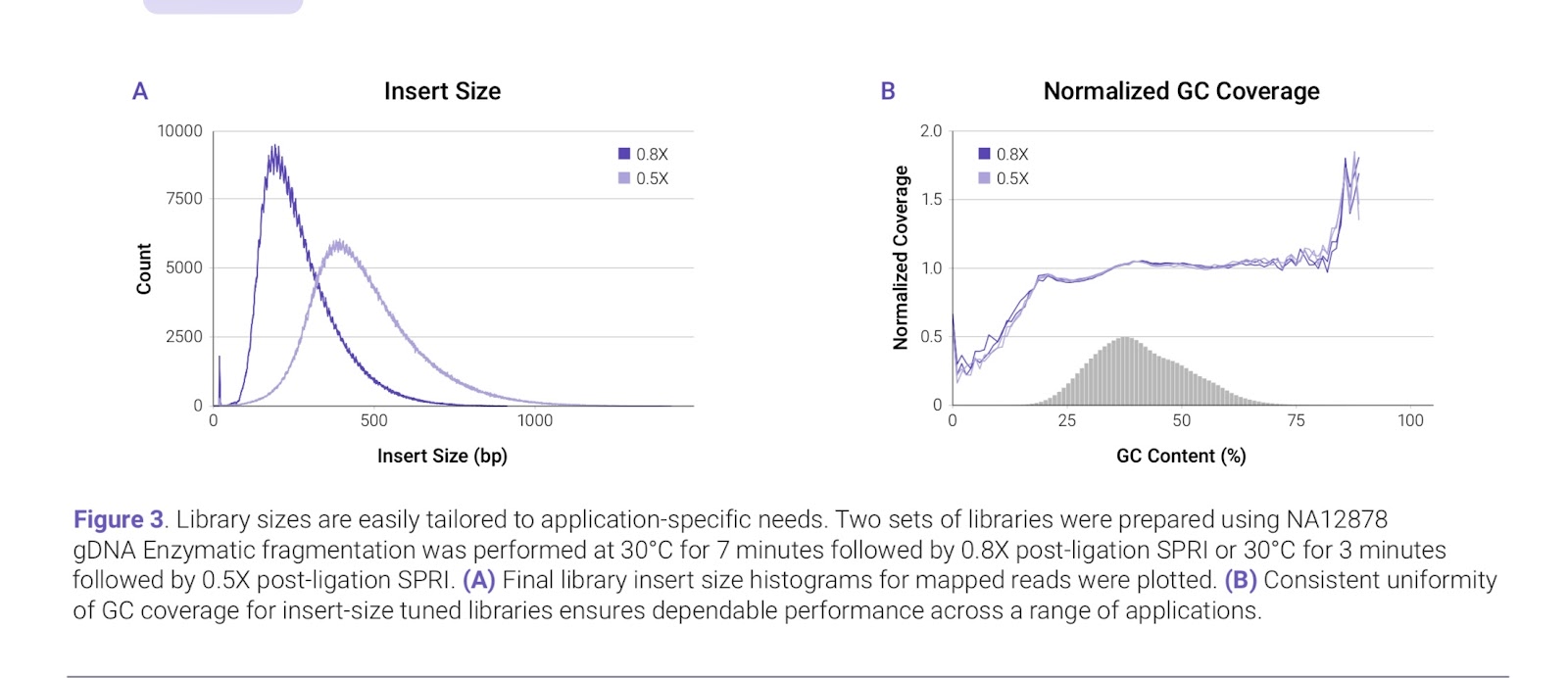
The application note from Watchmaker shows excellent uniformity across the range of GC content found in a human sample 
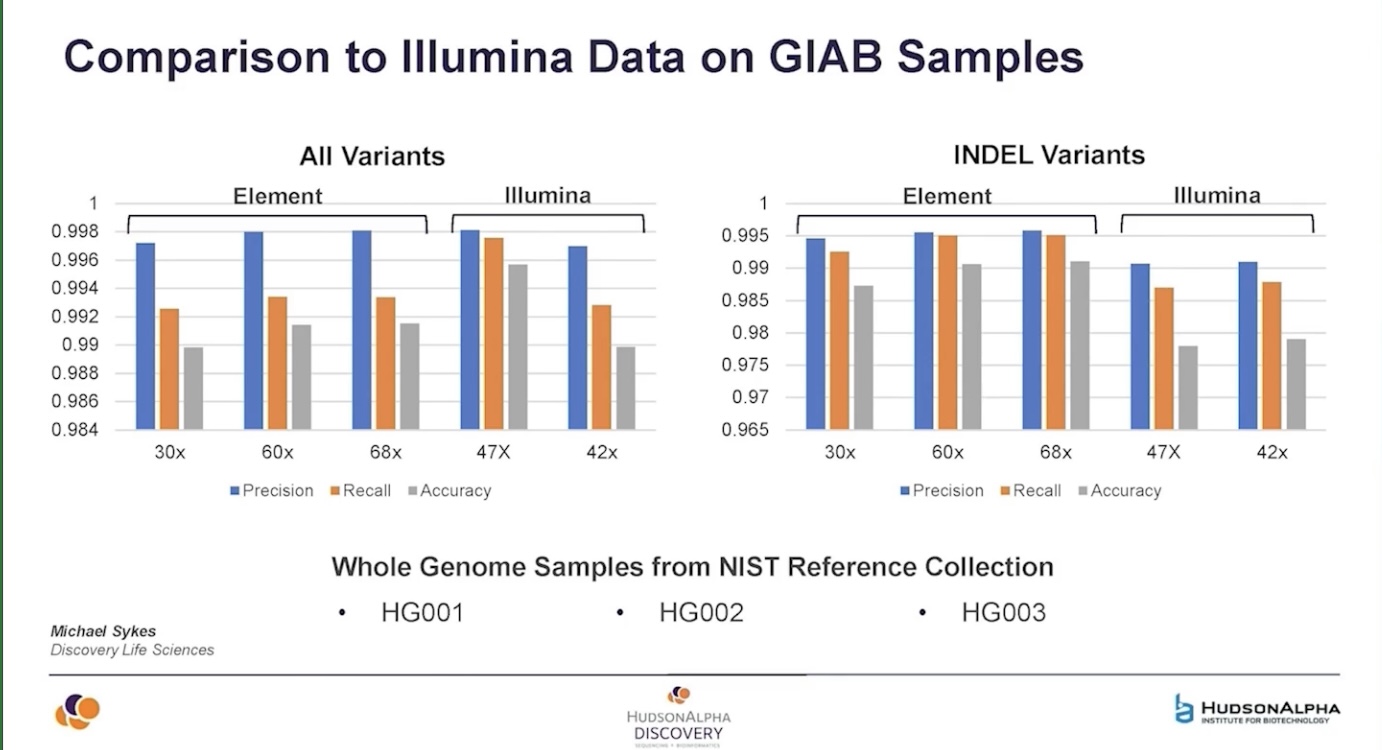
HudsonAlpha data showed by Shawn Levy suggests that AVITI is superior to Illumina for small indel calling but slightly worse overall - but pay attention to those Y axis ticks - it’s about 0.4 percentage points different (though the failure to downsample to same depth for this slide  makes the comparison dicey).
Market Strategy

In terms of competing with the entrenched market leader, Element is counting on some marketplace judo.  The thinking is this: Illumina’s real focus is on NovaSeq in huge sequencing factories; that’s their main driver of revenue.  AVITI will be aimed right around the overlap between the NextSeq 2000 and the bottom of NovaSeq performance (SP flowcell), but cutting under the list price of NextSeq and offering a lower (list) consumable option . And that’s not a small amount lower - based on the list pricing for NextSeq reagents currently in Albert Vilella’s wonderful  NGS comparison spreadsheet, AVITI with delivers twice the output of a P2 flowcell (800M 2x150 reads vs 400M)  for 47% of the price ($1680 vs. $3800) - so about 4X improvement in price vs. performance!  NextSeq P3 flowcells are specified to have 50% more data than AVITI, but the price/performance ratio is around 2-fold (5-7 dollars per gigabase vs. 10.5 for P3).  Of course, real values depend on field performance and whatever pricing Illumina grants an organization.   Presumably Illumina could give up some margin on NextSeq to compete, but they risk disincentivizing labs upgrading to NovaSeq if the NextSeq becomes too favorable for smaller jobs - and the NovaSeq margins are too important to be touched  That’s one thesis Element is working from. Element’s belief is that “decentralized sequencing will enable more scientists and clinicians to accelerate their learning without compromising cost and quality”. 


Another marketing thought is lifted from the Innovator’s Dilemma: the idea is that NovaSeq really overshoots the performance needs of most labs but there is a sizable market, particularly with core facilities, for a more modestly-priced instrument that offers flexible operation but enough data to satisfy common academic sequencing experiments. NovaSeq’s temptingly low cost per base only works if you are running it in the high output modes and if those bases really are useful, and many core labs have trouble filling flow cells in a timely manner.  Not only is the NovaSeq (list) about three fold the price of AVITI, but that also means the annual service contract in following years will also be about three fold higher.   There’s also of course a feeling that the genomics field strongly desires some effective competition for Illumina in core markets and there is pent up demand for an alternative.


Element will be implementing transparent, uniform pricing.  There will be volume discounts available, but the same ones for all – no haggling to try to get a better price only to discover you’re not as good at haggling as you think.  Also good for people like me who (a) hate haggling and (b) want to be able to compare prices without worrying that reality is very different than sticker prices.


Will Element Succeed?

When I was visiting I really was taken by the focused intensity of the technical team and the enthusiasm of the leadership team – which included discussions with Board members (and industry veterans)  Jim Tannanbaum and John Stuelpnagel.  John, for example, catalyzed the formation of Illumina and was on its board for many years; since then he’s started or been on the board a range of genomics-focused companies in microfluidic library prep (10X Genomics), non-invasive pre-natal testing (Ariosa), immunosequencing (Sequenta) and genome editing (Inscripta).  Jim’s resume overlaps with 10X, but has been more pharmaceutical focused: Jazz Pharmaceuticals, Innoviva, Theravance, and GelTex   Both described in careful detail their excitement with Element’s technology and their satisfaction with how Element’s team has executed on developing that technology.   On the applications side Element has snagged as a senior vice president Shawn Levy, well known for road testing new sequencing platforms and technologies during his tenure at HudsonAlpha Institute.  So they have a huge base of talent and expertise to drive the launch into the sequencing market.


Will this all work out for Element?  As I discussed earlier in the year, there are multiple companies jumping into the short read market over the next year or so.  Singular plans to launch in early summer, BGI should be free of patent constraints by late summer and PacBio plans to launch Omniome technology sometime next year.  Oxford Nanopore wants to play in this space too, though to say their reads are different in quality than Element’s is a bit of an understatement.  Illumina promises higher qualities with Chemistry X, though without any details as to when this chemistry will launch and complete uncertainty whether it will be part of a new fleet of instruments.  And perhaps there are other new entrants flying under the radar.


Given all that, Element will must execute nearly flawlessly in locking down some customers, getting instruments and consumables to customers, dealing efficiently and in a forthright manner with the inevitable hiccups as instruments enter the field and generating increasing buzz at meetings such as the different incarnations of AGBT.  Independent confirmation of their read quality claims on a variety of different inputs will be something to watch for, particularly on challenging targets such as extremes of %GC, long homopolymers, long VNTR repeats (such as in triplet expansion disorders), and strong hairpin-prone structures.


Stay tuned.  Watching Element execute promises to be interesting.


[20220315 06:16 fixed homogeneity --> inhomogeneity ]


Thursday, February 17, 2022

Pro Tip: Customer Hostile is Never A Good Look

A bizarre incident happened on Twitter yesterday.  Someone contemplating using Oxford Nanopore to sequence a large, complex genome on a tight budget was asking technical questions about whether to optimize their libraries for overall yield or long inserts, and was getting useful advice from some of the top academic scientists who have propelled ONT forward.  One of them suggested using Circulomics products, and that was followed by an ominous yet vague warning from an ONT employee.  But not just any ONT employee, but Chief Strategy Officer Spike Willcocks.  Having not seen a retraction of that tweet, I'm here to point out just how self-defeating the warning is.

Tuesday, February 15, 2022

Parse Bio Pools Further Funding

Seattle-based single cell analysis firm Parse Bio is announcing this morning a $41.5M Series B round of funding, pushing their total raise just over $50M.  Parse uses chemical fixation to lock biomolecules onto their enclosing cells or nuclei, which can then be manipulated without releasing their contents.  This enables a series of split-label-pool operations to tag the molecules of interest with barcodes so that in the end each cell has a unique barcode.  The protocol requires no specialized instrument, enables collecting samples over different timepoints while quenching changes in gene expression and can scale to very high cell numbers. Co-founders Alex Rosenberg and Charlie Roco sat down with me over Zoom last week to review the company and their technology.

Monday, January 31, 2022

Notes from a Conversation with PacBio's Christian Henry

PacBio CEO Christian Henry was kind enough to chat with me by videoconference just after JP Morgan.  To get the the obvious issue out of the way, let me say that while it is common to agree to meet with interview subjects at some future date when they are in Boston, he is the first one to suggest he would just stop by my desk and we'd head to a break room.  Henry sits on my employer's board, so if you think that shades my opinions you are forewarned.

Monday, January 17, 2022

Could Hercule Poirot Crack The Case of Genapsys' Business Strategy?

If you love a good mystery, let me try to draw you in to the enigma of Genapsys' business strategy.  Genapsys presented last week at J.P. Morgan, but nobody who wasn't there knows what they said or presented.  Keeping their future plans hush-hush is a strange course for a company that hasn't caught fire and is about to face multiple well-funded new competition.

Wednesday, January 12, 2022

Illumina Teases Two Glittering Enigmas

Illumina's J.P. Morgan presentation was largely focused on various applications of their platform.  But on the further platform development side, they did throw out two new products as very, very limited descriptions: Chemistry X as the future of sequencing-by-synthesis and Infinity for 10 kilobase synthetic reads.  Both have triggered a lot of speculation and indeed some very clever sleuthing, since neither really had anything but the faintest of details provided

Tuesday, January 11, 2022

Apologies & A Vow To Do Better

To my readers: I am quite embarrassed by the multiple errors which were present in the first two postings of the year, which include incomplete sentences in jumbled paragraphs, small but key errors of fact and writing "short read" in a key place where I meant "long read'. They are the sort of errors I can be quite harsh on others making.  I put too much emphasis on pushing these out and far, far too little on proofreading and reviewing them.  You deserve better.

Thursday, January 06, 2022

Three Reactions from December's PacBio+Invitae Mendelspod


Theral Timpson hosted PacBio CEO Christian Henry and Invitae CEO Sean George for a Mendelspod podcast  back on Pearl Harbor day last month.  It's a fun, chatty interview with the two which illustrated why these two companies have an excellent strategic fit.  I won't summarize all of it, but I did have strong reactions to three points

Monday, January 03, 2022

2022: A Wild Year for Short Reads?

It looks like 2022 might be an exciting year for the short read genomics market, with new players taking on Illumina.  J.P. Morgan will be virtual next week, so perhaps some of the players will make some announcements.  Here's some thoughts on the situation as it stands now in a space where many of failed before -- QIAGEN, ThermoFisher (SOLiD) and Roche(454) -- as well as some have bailed out before even entering -- Agilent.

Friday, December 31, 2021

Reflecting on Anniversaries and Changes

As the year closes out for me (as I write this, it may well have closed out for some of you!) I'm reflecting on some anniversaries that were concentrated in this year, particularly those that are multiples of an early evolutionary developmental decision millions of years ago.

Monday, December 13, 2021

ONT Community Meeting 2021

Oxford Nanopore held their annual Community Meeting online at the beginning of this month.  As is typical for this stage of the ONT news cycle, most topics were confirmations and updates of earlier projections, with little brand new material.  There was one surprise, a new concept for running nanopore with little to no auxiliary lab equipment.  Oh, and perhaps in the surprise category is Oxford appears to be finally moving away from the R9 pore which has been their mainstay for many years now.

Tuesday, October 26, 2021

A Look at Two HiFi Polisher Preprints

PacBio has made its reputation delivering very high accuracy long reads, which they have branded HiFi. These are based on their circular consensus technology: each template DNA molecule is converted into a single continuous circle of DNA which can be read in a rolling circle reaction.  The "movie" is converted to raw base calls and the adapters are clipped out, leaving "subreads" which can be aligned together to generate a consensus (CCS) read.  With many passes over the same molecule and its complement, the relatively high (~15%) error rate of the raw data can be brought down substantially using an HMM-based scheme.  PacBio calls reads HiFi at 1% error rate, but their model calls overall quality for reads and it can keep getting better from there.  Homopolymers still bedevil the technology, though not like they once did and it turns out there is at least one more systematic error class.  Consensus building is a powerful way to cut through error.  But could you do better?  Two recent preprints from large tech companies, with PacBio co-authors, apply deep learning to this problem and each comes up with the astounding result that they can do a bit over 40% better.  

Wednesday, August 04, 2021

PacBio Pulls Down Circulomics

I was on vacation early this week when the news broke that PacBio has acquired HMW DNA solid phase extraction kit maker Circulomics -- the kind of vacation that I need where the scenery is gorgeous and the internet access terrible.  Where solid phase means monumental slabs of granite with diabase intrusions being attacked by a high salt liquid phase.  Where I actually sighted Atlantic Puffins and didn't once think about sequencing their genomes ('til now!).  But now I'm back to work and genomics.

Tuesday, July 20, 2021

PacBio Enters a Binding Agreement to Acquire Omniome

Pacific Biosciences announced today that they are slurping up short read sequencer startup Omniome for around $800M.  Omniome has been developing an interesting clonal read technology.  On the conflict-of-interest side, many years ago (and I think an entire management team different) Omniome treated myself and my family to a weekend in San Diego (it was my son's birthday weekend) so I could look at their technology back then -- my NDA has expired but so has most of my memory of what I saw at that meeting!  Also the periodic reminder that PacBio Christian Henry sits on the board of my employer, though we haven't met. Simon Barnett of ARK Investments (which is a major holder of PacBio stock) has a very nice explainer on the Omniome Sequencing-By-Binding (SBB) chemistry and his bullish perspective on the acquisition and there is a proof-of-concept publication of the technology. I'll briefly explain the tech and then outline my somewhat more bearish view. It's also interesting to note that the FTC's actions on Illumina-PacBio and Illumina-Grail have analysts jumpy about this acquisition attempt.

Tuesday, June 29, 2021

ONT Sketches Paths to Long, Selective, Accurate Sequencing

Some sort of summary of London Calling in this space is grossly overdue after getting caught by multiple work firedrills and then several recursive rounds of procrastination. I'm not going to attempt to cover all the company announcements.  I'm going to focus on a cluster of announcements that show a long range vision of inexpensive sequencing consisting of very accurate, very long reads.  Well, a cluster of visions -- some parts can be mixed and matched and others cannot. This should be a prospect to grab the attention of any current or aspiring ONT competitors.  Now before I'm accused of being a gullible shill for Oxford, I want to make it clear I think that running the table on these will be technically difficult and is many years in the future.  But  even if Oxford manages some of these but not all, they would substantially upgrade their platform.

Wednesday, June 02, 2021

New Clinical Human Genome Speed Record

I proposed last year that there should be a regular racing event for human genomics.  The only real competitor in is this interesting race seems to be Steven Kingsmore's group at Rady Children's Hospital.  I was sent an embargoed press release from Illumina about a new record by that group, which clocks in at 13.5 hours from patient sample to clinical report. A New England Journal of Medicine paper (hence the embargo, ending just before I post this) reports on the advance but wasn't in the packet I received.
 

Tuesday, May 25, 2021

Matt Meselson Needs a Biographer!

Yesterday was Matt Meselson's 91st birthday.  I have only met him a few times and he wouldn't know me from Adam, but he is a particularly interesting individual I've had the good fortune to converse with.  I'm putting out a plea now for a skilled biographer to write his life, because it certainly has been an interesting and impactful one, with scientific work stretching from the early beginnings of molecular genetics to a preprint just recently posted on BioRxiv.

Thursday, May 20, 2021

My Latest London Calling Thoughts

The title really says it -- London Calling has actually already begun and here I am pretending to write a "before the conference" piece.  Of course, since everything is virtual again this year I can actually do this since I haven't watched anything yet nor have seen any tweets -- and the big technology announcement section isn't for a few hours so I have loads of time to write!  Sadly, nor have I gone and looked at what I've written before.  Nor have I defended these two days very well - my schedule is cluttered with meetings and appointments.  So I haven't prepared in any way, shape or form -- but here goes some thoughts.

Sunday, April 25, 2021

GISAID Broken Down by Sequencing Hardware

The GISAID database has been the workhorse for storing and distributing SARS-CoV-2 sequences during the COVID-19 pandemic and recently passed one million entries.  There was some Twitter chatter wondering about the hardware breakdown for this, as it isn't really easy to get out of GISAID.  I had done a somewhat arduous partial take at this for my VIB talk last month, but in the meantime GISAID had granted me some additional access to metadata which I've been too busy to tackle.  But knowing some others were curious, time to dive back in. 

Tuesday, March 02, 2021

AGBT21: VizGen Unveils MERSCOPE

More spatial profiling news coming in from AGBT -- Harvard spin-out VizGen is launching in the U.S. an instrument implementing MERFISH technology.  This sub-$300K instrument will initially enable panels of up to 500 genes to be profiled, with plans to expand that capacity to 1000.  Users either pick from a menu of pre-designed panels or select genes using a Gene Panel Design Tool and VizGen would proceed to manufacturing the panel in around two weeks.  VizGen CEO Terry Lo and Senior Director of Marketing Brittany Auclair were kind enough to give me a preview last Friday.

Monday, March 01, 2021

AGBT21: The LabRoots Presentation Platform is an Unmitigated Disaster

Rant is ON! I've been having an utterly miserable experience with the LabRoots conference software that AGBT is using for their virtual meeting.  This year has exposed many of us to a wide variety of teleconference and virtual meeting software and many of the glitches are small and hard to pin down.  Or matters of personal preference (though if you don't share mine, you are simply wrong!).  But now on two major platforms I've come across major issues with LabRoots

AGBT21: Rebus Esper for Spatial Sees Things You Wouldn't Believe

My prediction that spatial would be a hot topic at AGBT was easy to make knowing I was sitting on embargoed news in the spatial space.  This morning Rebus Biosystems announced the launch of the Rebus Esper system for wide field spatial profiling of gene panels with subcellular resolution.  Rebus is promising that this instrument will offer true walkaway automation from fluidics through imaging, and data processing, requiring only one hour of hands-on time.

AGBT21: A Few Pre-Conference Mutterings

Getting some miscellanea out before AGBT21 starts later this morning

Sunday, February 28, 2021

AGBT 2021: A Spatial Foundation

I'll call it now -- the big buzz at this year's AGBT will be around spatial profiling.  Trust me, it's not just a hunch.  The two current players in the field -- nanoString and 10X Genomics -- both have significant presence in the virtual conference.  Don't be surprised to see more players on the field -- just sayin'

Saturday, February 27, 2021

PacBio With SoftBank's $900M: How Might TheyWork?

Pacific Biosciences continued its roll of successful business development, snagging $900M from Japan's SoftBank two weeks ago.  Combined with a recent secondary stock offering and a major deal with Invitae, PacBio has gone from their self-proclaimed near-derelict status during the Illumina acquisition attempt saga to rolling in cash.

Friday, February 26, 2021

More Details on 10X's Sample Profiling Trident

10X Genomics had an online event Wednesday called Xperience (as far as I could tell no Jimmy Hendrix music was used, a missed opportunity!) to lay out their development roadmap.  This largely paralleled the presentation given at J.P. Morgan, but there were a few new bits and of course much more technical detail to whet the appetites of scientists -- and judging from a number of very positive tweets I saw today they were successful in that goal. Some of the 10X management was kind enough to walk me through the deck earlier this week as well as permission to borrow images from it, so this summary is based on that as well as watching the presentation.  While their name is 10X, the company emphasized progress on three axes: scale, resolution and access and that progress across the three different platforms. 

Tuesday, February 09, 2021

Could I See Myself at J.P. Morgan?

There's a question that others pop my way pretty much every year around J.P. Morgan: would I ever attend myself?  I'll confess it never occurred to me before I was asked, but that isn't necessarily a deal breaker.  I foolishly didn't attend AGBT until 2013 when Alexis Borisy (then CEO of Warp Drive) suggested I go -- I think it was mostly because he thought it was a good investment and probably only secondarily to keep me off the ski slopes for a week -- I shattered my knee just after AGBT 2012 ended.  It's an interesting but complex question which I will answer one way here, but freely admit that over coffee I could be nudged one way or the other.

Monday, February 08, 2021

Why I Hated One Genapsys Slide

I claimed in my Miscellanea piece that I was one post away from being done with J.P. Morgan -- oops, forgot I had drafted a minor screed on data display which I'll push out before the last piece - particularly since I hinted I would be taking Genapsys to task on this subject.  Unexpectedly good timing too: maybe new Genapsys CEO Jason Myer's first big initiative can be to fix this plot!

Saturday, February 06, 2021

J.P. Morgan: Miscellania

Before J.P. Morgan is truly a month ago I should clean up some loose ends as a penultimate post driven by this year's virtual conference (the last post isn't exactly time sensitive).  In contrast to the single company focused items that preceded it, this is a grab bag of minor observations and notes.

Thursday, January 28, 2021

J.P.Morgan: NanoString

Almost done with my J.P. Morgan summaries -- this will be the last focused on a specific company: nanoString.   They wish to emphasize that they are becoming the company for spatial analysis of DNA, RNA and proteins in biological samples.  They also want us to differentiate that space into two segments: profiling and imaging.  Profiling gathers spatial information from regions of multiple cells; imaging in their lingo covers spatial techniques with single cell or subcellular localization. In both cases nanoString is betting heavily on oligo-tagged antibodies to enable deep multiplexing of protein detection to be integrated with RNA and DNA detection.  

Monday, January 25, 2021

J.P. Morgan: Genapsys

Genapsys' J.P. Morgan presentation by CEO Hesaam Esfandyarpour focused on their story of delivering a compact sequencer based on electronic detection that offers low capital, low cost sequencing.  There were two bits of specific product news, but mostly general painting of a rosy picture.  

Tuesday, January 19, 2021

J.P. Morgan: PacBio

PacBio CEO Christian Henry’s presentation at J.P. Morgan wasn't rich in technical specifics. But he gave a very bullish portrait of a company aiming for the stars.  A conflict reminder: he’s a member of the Board of the Strain Factory that employs me, though I haven’t yet had the pleasure of meeting him.

The biggest news is a broad partnership with Invitae four clinical human genome sequencing. The only specific here is that this is not the whole enchilada; platform development will take place both within the Invitae collaboration and outside it. What might that development be?

Between Henry’s comments in the Q&A and a few info crumbs on slides there will be pushed to further tune all the canister. Her mentioned efforts on dyes and further improving SMRTcell loading efficiency. There was chatter on Twitter about an overdue update to improve HiFi yields.

Henry talked of the importance of increasing ZMW packing, but gave no specifics other than to suggest this is more "development" than "innovation" -- this was in response to a question asking if technical breakthroughs are required.   But we are left wondering on a timetable as well as what the next density might be; four-fold to 32M  wouldn’t be surprising on naïve geometry grounds. 

I suspect a huge area of joint effort with Invitae will be to automate HiFi library production. The current protocol is long, manual and labor intensive - not at all appealing for lease scale clinical use. How much of that will be retained as proprietary to Invitae will remain to be seen.  Henry claims that the Invitae effort will be separate but coordinated with existing development efforts; prior plans have not been shelved or diverted to support Invitae. A major software effort to support clinical operations is a given. PacBio has separate workflows for SNP and SV calling and those must be integrated and a clinician-friendly report generated. 

Henry believes that the new Sequel IIe will be the dominant product shipped going forward.  It will be interesting to see which of the older workflows PacBio updates and moves into the on-board compute.  For example, if you want to call methylation you must export BAM files with kinetics data, which are predicted to be five-fold fatter.  If the methylation calling happened on board, then that extra processing and extra data would be eliminated.  

Similarly, workflows such as microbial assembly are still based around Continuous Long Reads (CLR).  Henry didn't mention CLR once (I think).  While I doubt they would ever dump it altogether like they did Strobe Reads, it would seem likely that it won't get much attention.  Oxford Nanopore can beat them on very long reads and their single molecule accuracy is much higher; far better to focus on the CCS/HiFi reads where PacBio can deliver much higher accuracy.  It will be interesting to see if PacBio pushes the HiFi fragment read length longer.  On the one hand it will be more challenging to work with longer fragments and to routinely get enough circuits around them to deliver HiFi quality data.  Twenty five kilobases is a nice size for many applications, but there will always be incremental value for going to thirty or forty or beyond.

In response to a question about $1000 genomes, Henry described it as "just a number" around "where it makes sense" in high throughput applications.  He says the Invitae collaboration will be able to drive prices below $1000.  But he also pushed the idea that a PacBio genome is a truly clinical grade genome and has higher value than genomes produced on other platforms.  He argued that this higher value, in terms of higher diagnostic yield for rare diseases, will be more attractive to payers and that there will be a net benefit to the healthcare industry by ending diagnostic odysseys sooner.   He vowed to continue generating "diagnostic proof statements" to provide evidence to support the higher value claim.

Should be interesting to watch, particularly if you have a front row seat in front of a Sequel IIe,

Saturday, January 16, 2021

J.P. Morgan: 10X Genomics

As I attempt to collate various incomplete thoughts about the J.P. Morgan presentations I have read and listened to from genomics instrument shops, one thing stands out about 10X Genomics: they actually announced new gadgets and kits! I should thank the company for supplying the slides after I snarked on Twitter about how they weren't archived in the J.P. Morgan webcast -- but now it is there.  So either my eyes failed again or I had a personal IT failure (I think the website doesn't like iOS and I may have forgotten that).  The slides were presented by CEO Serge Saxonov

Thursday, January 14, 2021

JP Morgan: Illumina

Illumina presented at J.P. Morgan on Monday, reminding us that they aren't just a sequencing instrument company but an interlocking set of businesses focused on genomics. CEO Francis deSouza spent much of his time discussing the Grail acquisition and some of the other ways in which Illumina is pushing rapidly to become an essential part of clinical medicine, but there was one slide on future improvements to sequencing technology and a few on the lineup of existing sequencers.  Reminder: I'm working off public sources, as during the day we work closely with Illumina and they even sunk some serious cash into my employer last May.

Monday, January 11, 2021

J.P. Morgan 2021

The J.P. Morgan Healthcare Conference has started this morning in virtual form, so I'd really better get this draft cleaned up and out (indeed, Roche is presenting as I hurriedly type, though about pharma not diagnostics).  2021 already feels like a darker continuation of 2020, between the appalling putsch attempt in my nation's center of government last Wednesday and the still buggy roll-out of the coronavirus vaccine.  As I noted in my piece on the Oxford Nanopore Community Meeting, the many disruptions of 2020 make grading the progress of companies essentially impossible: many were disrupted by lockdowns, supply chain issues and the general distraction from the year of doomscrolling. 

Sunday, January 03, 2021

Advent of Code vs. FizzBuzz

A bunch of coding types at the Strain Factory participated in The Advent of Code, a clever 24-day set of programming challenges that runs each year before Christmas.  Each day a new two=part programming challenge was posted.  Technically it is a speed contest, but you won't find me on the public leaderboard as I'm not nearly quick enough to ever rate a point there.  One of my  major official activities last month was contributing towards screening candidates for three different computational positions, one of which we threw open to general data science experience.  As a result, I've been thinking far too much about the FizzBuzz problem and my prejudices towards it.

Saturday, January 02, 2021

Peri-New Year Nanopore Playing

Ever since the community meeting I've been toying with an idea,  then never quite trying to code it.
 So on New Year's Eve I started getting the dataset together and reducing it to a bunch of dataframes, and today I pushed that a bit further and started graphing some of it.  It's very much a rough project -- some of the dataframes have some issues I'm still chasing down with redundant data not being initially collapsed, but I think the data is accurate.  I also think I have my conventions consistent -- at one point confused myself into inverting the labels on the plots!  In other words, ApG would be labeled GpA -- not good! There's already some intriguing patterns, which are presumably the sort of signal tools like Medaka use to polish assemblies from FASTQ data aligned to draft references.

Friday, December 18, 2020

Nanopore Community Meeting: Progress Despite the Pandemic

I realized a few Oxford Nanopore announcements too late that I should have tried to log all their predictions with a date made so I could track carefully any delays or quiet disappearances from the new feature lineup.  If I had done that, this year would have presented an even worse conundrum: how do you score progress in a year of constant disruptions?  Like many companies in the sequencing field, at least some of that disruption has been a diversion of attention and resources to fighting the pandemic.  For ONT that is largely supporting the ARTIC viral genome sequencing and also developing LamPORE diagnostics.

Sunday, December 13, 2020

BGI Floats Idea of Tape-Based Sequencer

I reported on the AGBT 2020 final talk a few centuries ago -- or at least it seems like that given how quickly the world went to hell just after that -- by BGI in which Rade Drmanac showed off a system which I described as a deconstructed sequencer -- an integrated set of plate handling robots, liquid handlers and imagers which dipped the slides into reservoirs of reagents instead of flowing them through a flowcell.  Now BGI has a preprint on BioRxiv which takes this idea a bit further, changing out the reagent tanks for a polymer film on which a thin layer of reagent is distributed, which is then pressed gently against the slide surface to deliver the reagent to the DNA Nanoball (DNB) array.  The preprint is filled with eye-popping numbers -- Petabase sequencing!

Monday, November 30, 2020

PacBio's Renewed Energy

When confronted by antitrust regulators last year, the core thesis of Illumina and Pacific Biosciences was that PacBio could not survive as an independent company.  After giving up on the merger, PacBio decided to dispute their own thesis -- and seem to be succeeding so far.  As highlighted at their recent "Global Summit" meeting, they have a new CEO, new financing and a burnished product offering.

Thursday, November 19, 2020

Bioinformatics Exercise: Gene-Specific Ser Codon Usage

I saw a provocative abstract in PNAS about the usage of serine codons in E.coli that triggered the "this could make an interesting student exercise" (for my prior effort, see: Exercise: A Sequence Signature for Transcription-Translation Coupling in Bacteria?).  The paper is behind a paywall (though a relatively cheap one at $10) so I haven't actually read the paper, but the purposes here that isn't really a problem -- I'm not going to critique the paper, but just use the concept as a springboard.

Saturday, November 14, 2020

Bionano Genomics: A Belated Update

Back before I can remember -- as in January of this year -- I wrote a piece on the challenging situation of BioNano Genomics.  I got an important detail wrong in that piece, missing some important fundraising, but in general from the point-of-view I took I thought it was a decent piece, meant to convey the challenge of a really amazing technology having its original market disappear.  Some commenters took strong exception to the piece and suggested I had not-so-pure motives for writing it.  They're wrong -- but at AGBT I got a chance to learn more about the company's new direction and how I hadn't been looking at things quite appropriately.  I should have written it up there, but working on a response to the pandemic started taking over my life and I let time slip away.  Preparing crow to be eaten also tends to be procrastinated.  But here, finally, is a re-look at the company (and, I drafted this over a month ago and never finished -- the procrastination drags on...)

I was a bit nervous strolling into the BioNano Genomics booth at Marco Island.  Maybe they were the ones so offended by the piece.  But no, they actually invited me to come to a morning talk and to chat afterwards, and were completely professional and cordial and made it clear they understood the angle I had taken as a sincere journalistic approach.  But not only did I hear the talk then, but I had gotten a preview the night before in the Twist Suite, which also illustrates a key card BioNano has: a collaboration with Alexander Hoischen

Monday, October 12, 2020

10X Triples Down on Spatial Analysis

10X Genomics last week announced the purchase of ReadCoor, a company that unveiled its 3D spatial sequencing instrument back at AGBT, paying $350M to acquire the Cambridge MA company.  This follows quickly on the heels of 10X purchasing Swedish in situ sequencing company CartaNA for another $41M.  10X already had the Visium spatial transcriptomics product on the market.  So now 10X has three different technologies in the spatial profiling space.

Wednesday, September 30, 2020

Keeping an Index on a Subtle Difference in Illumina Chemistries

I like to pretend in this space that I catch all the little details of the different sequencing platforms.  Well, at least over time I try to do that.  But ego aside, that is often a mark not made.  A bit of a year ago I discovered that there's a small difference across the Illumina family that is completely separate from how clusters are generated (Bridge Amplification randomly arrayed or Exclusion Amplification in nanowells) or the wavelengths of light used in the fluorescence microscopy (now blue on the newest NextSeqs, with superresolution microscopy coming soon)  or 4 color vs. 2 color vs. 1-color (well, really staged 2-color) chemistry for the reversible terminators.  There's a subtle difference in how the second index is read.  I'm not spilling a deep secret: it's right out in plain sight within an Illumina technical document

Monday, August 31, 2020

Self-Assessing My Python

I've been programming 90+% in Python now for over a year and a half -- when I joined the Strain Factory I vowed to finally make the break from Perl.  Partly this was disgust with so often finding libraries I wanted to be missing or broken, and partly it was recognizing that the Factory is primarily a Python shop and I would have the most impact if I worked in the lingua franca. I was first exposed to Python back at Codon Devices, but there was a strong C# faction there and I fell in love with that language, so my primary dabbling in Python was learning enough to glue the key Python code into my C# with IronPython.  I strongly considered changing over at the start of Warp Drive, but gave it too weak a try and quickly started churning out Perl.  I still use that language for basic level text munging, but have avoided writing nearly anything that occupies more than one screen.

Friday, July 24, 2020

Two Pandemic-Related Programming Problems

I will offer here two bioinformatics programming problems which I think are interesting, useful and should be approachable by an advanced undergraduate.  For a variety of reasons I've been thinking a lot of about skill levels and how to assess them.  One key reason is we have two open slots in our group, so I'm plowing through CVs and engaging in the usual hiring funnel struggle -- how do you winnow CVs to phone screens and then down to interviews? We also thought we might, but now won't, bring on a one year intern.  But I'm also trying to take a look at my own skill set with a critical eye.  Plus I maintain a Quora addiction, and you see there people looking for ways to prove their computational biology chops.

Monday, June 29, 2020

Virtual London Calling, Veritably Late, Part II: Platform Development

Last time, I covered Oxford Nanopore LamPORE COVID-19 detection scheme.  London Calling was over a week ago, so the chance to scribble before its all old news is rapidly shrinking.  As noted yesterday, Clive Brown didn't speak here but instead will broadcast at some future date; it was left to his top technical lieutenants to cover the developments in the platform which have happened since the Community Meeting in New York back in early December.  I've tried to hit the highlights here, but don't claim to be comprehensive.

Wednesday, June 24, 2020

Virtual London Calling, Veritably Late Copy: Part I, LamPORE

London Calling was last week, held online due to the pandemic.  My plans to attend in person were one of a myriad of travel arrangements upended by the calamity, though that is utterly trivial in comparison to the tragedy of so many lost lives, damaged survivors and economic ruin.  Attending remotely also made it harder to ignore my work duties, which are at a crescendo (well, not really: it's been this intense for months).  But all the talks are available online, so I have stolen some time to review the Oxford Nanopore technology announcements.  There wasn't a Clive Brown talk; apparently he will deliver a broadcast later this summer to tease us with more crazy ideas emerging from the ONT Skunk Works.

Friday, May 29, 2020

Roche Expands Sequencing Nanopore Presence by Acquiring Stratos Genomics

Ugh.  I let the month of April slip away without writing and now have almost let May do the same.  But some leftover euphoria from a huge experimental breakthrough on our current diagnostics project at the Gene Factory plus the feeling I shouldn't let news tied into an earlier post slip off, and here I am.  When I wrote about sequencer startups back in February based on their websites, I put Stratos Genomics near the front of the pack.  Roche Molecular apparently agrees, announcing a week ago that they are acquiring Stratos.

Monday, March 30, 2020

One Gemini Celebrates Another

One of most truly useless pieces of information lodged in my brain is my zodiac sign; not once in my life have I had any interest in it.  But, given the available draws, it isn't too bad, as it's also the name of perhaps the most underappreciated engineering project of the second half of the 20th Century: Project Gemini

Saturday, March 21, 2020

1918 Flu Pandemic & Popular Culture: Take Two

My piece on the near amnesia in U.S. culture of the 1918-19 Influenza pandemic provoked a number of helpful comments, emails and conversations.  While I would stand behind the statement that it left a light footprint, there are a number of interesting cases, some of which I would never have found by conventional means.  Sometimes the collective wisdom of the internet is best for uncovering things, even when you're married to someone who catalogs books for a living.

Tuesday, March 10, 2020

This Time ThermoFisher Catches QIAGEN

This past fall there was a rumor that QIAGEN was being pursued by an acquirer, with the initial tip being scientific conglomerate ThermoFisher but then other possibilities floated by.  QIAGEN was seen as ripe for such an action as their long-time CEO had stepped down.  QIAGEN made a very public announcement that they would continue independently under their new CEO, but that is no longer the case: ThermoFisher will acquire them, pending regulatory approvals, for something around 11.5B

Sunday, March 08, 2020

Post-AGBT: Miroculus

AGBT ended over a week ago and I've been procrastinating ever since in going through notes and writing up companies.  First few days I had the excuse of family time on beautiful Sanibel Island to the north, but since Monday other than obsessing about COVID-19 (and cancelling travel plans) I have no excuses.  First up, the microfluidic library prep company Miroculus, based on my notes from talking to their Chief Commercial Officer, Adam Lowe

Saturday, March 07, 2020

Why Didn't the 1919 Flu Leave A Bigger Cultural Imprint?

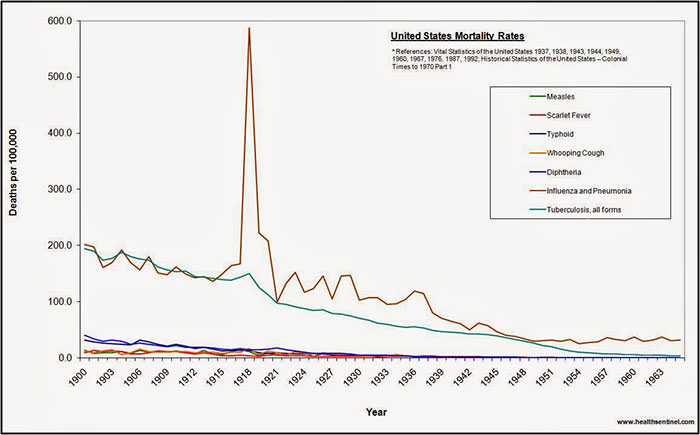
The still growing COVID-19 pandemic has reminded me of a question I've batted in my head a few times.  In 1918 and 1919 a global influenza pandemic killed on the order of 50 million people worldwide.  The scale of the jump in flu deaths in the U.S. can be seen in the below plot. That's more than the number of civilians and military personnel estimated to have been killed during World War I.  Yet despite this, it would seem that there has been very little impact on culture (at least the culture I am aware of).

Wednesday, February 26, 2020

MGI Deconstructs the Sequencer

At some fancy restaurants one can get a "deconstructed dish".  As I understand it, as I don't frequent such restaurants, a deconstructed BLT would have the bread, bacon, lettuce and tomato each as their own individual item, but prepared in a novel way which highlights the strengths of each ingredient.  When I got a preview last night of Rade Drmanac's closing AGBT talk on achieving a $100 human genome (reagents price only), that was the vision I had: Drmanac and his team have created their Tx system by deconstructing the optical high throughput sequencing-by-synthesis instrument.